
Malawi is witnessing a growing accumulation of scandals, accountability gaps and ethical controversies. From the CDF dispute to wildlife trafficking and carbon credit questions, the pattern raises concerns about the country’s political culture and the erosion of public trust in public institutions.
OPINION | Governance & Ethics | Patrick Mwanza
If Malawi were a patient admitted to a psychiatric hospital, doctors might struggle to settle on a diagnosis. The symptoms are many: erratic behaviour, poor judgment, selective memory and an alarming inability to distinguish right from wrong. But after a thorough examination, they might arrive at a simple conclusion: moral decay at the highest levels of leadership.
Political hypocrisy is hardly unique to Malawi. Around the world, politicians make promises that dissolve the moment they assume office. But in Malawi, the problem increasingly appears deeper than broken campaign pledges. It is becoming a pattern of conduct that raises troubling questions about ethics, accountability and the state of public life.
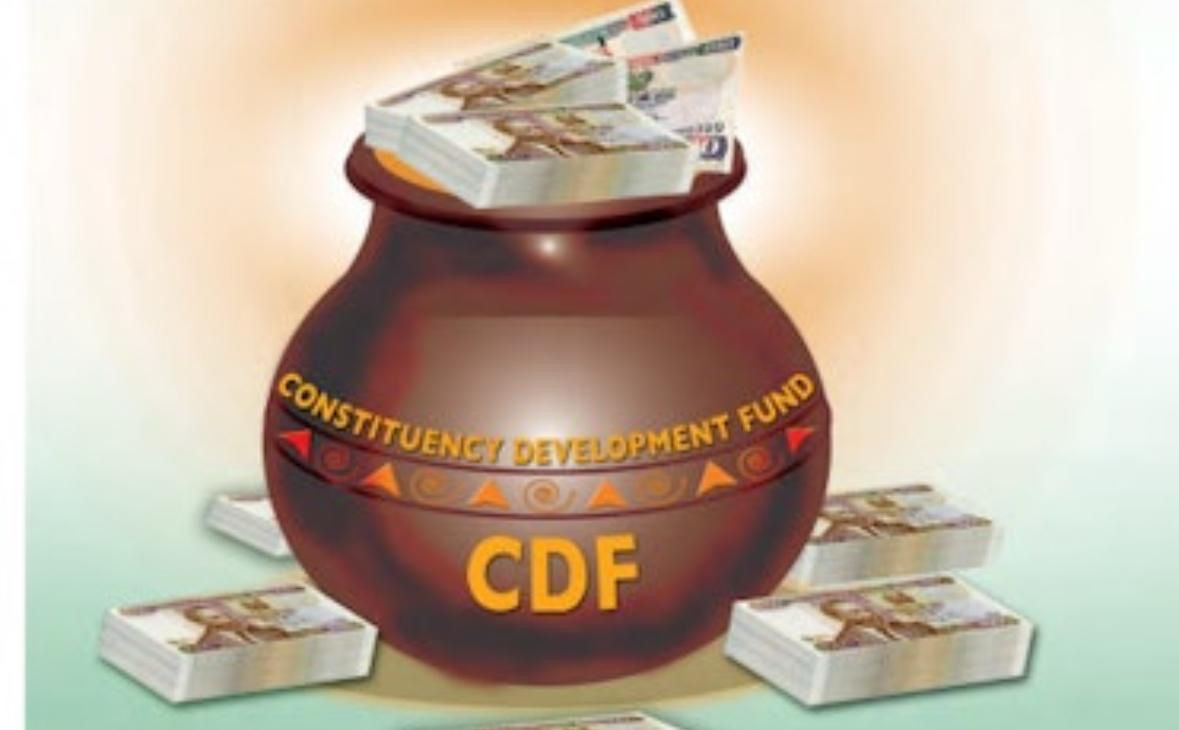
Consider the ongoing battle over the Community Development Fund (CDF), a programme that has seen a dramatic increase in funding in recent years. The High Court ruled that Members of Parliament should neither manage nor control the fund because doing so creates a conflict of interest. The judgment seemed straightforward enough.
Parliamentarians, however, saw things differently.
In a rare display of unity across political divides, lawmakers pushed for amendments to the law that would effectively restore their influence over the fund. President Peter Mutharika ultimately withheld assent and instead instructed government officials to develop administrative guidelines. The controversy exposed a recurring feature of Malawi’s politics: public officials often appear more interested in preserving access to resources than strengthening safeguards against abuse.
Then there is the controversy surrounding the purchase of a hotel by the Public Service Pension Trust Fund.
The transaction has generated sustained public scrutiny, particularly after reports emerged that government authorities had instructed those involved not to proceed with the acquisition. When Parliament’s oversight committee investigated the matter, questions multiplied rather than diminished. Former senior government officials were mentioned as key figures behind the deal, yet some failed to appear before the committee. Even the sellers of the hotel have appeared reluctant to cooperate fully, setting conditions before participating in the inquiry.
The result has been a familiar spectacle: allegations, denials, unanswered questions and a public left wondering whether anyone will ultimately be held accountable.
For critics of the government, these controversies reinforce the perception that each new week brings another scandal.
The latest concerns centre on allegations that Malawi’s Director of Public Prosecutions, Fostino Mayele, may have advised the Anti-Corruption Bureau (ACB) to withdraw corruption-related charges against convicted wildlife trafficker Lin Yun Hua, a Chinese national widely regarded as a central figure in an international trafficking network.
“Governments come and go. Political leaders rise and fall. What endures is the legacy they leave behind and the condition of the institutions they inherit and pass on.”
Twelve civil society organisations have demanded that Mayele publicly explain his role in the matter.
Their concern extends beyond the legal merits of the case. The organisations argue that any decision to discontinue the charges could undermine public confidence in both the ACB and the Office of the Director of Public Prosecutions. They have also called on Mayele to recuse himself from decisions involving Lin, citing what they describe as a potential conflict of interest arising from his previous role as legal counsel for the accused.
The groups warn that allowing even the appearance of bias to linger could damage the credibility of institutions already struggling to earn public trust.
Lin’s case has long attracted international attention. Arrested in 2019, he was convicted on wildlife trafficking charges involving rhino horn and other protected species and sentenced to 14 years’ imprisonment. He also received a six-year sentence for money laundering. Last year, however, he was among dozens of prisoners pardoned as part of Independence Day commemorations. The ACB subsequently sought to pursue separate corruption-related charges.
Civil society organisations have described any attempt to abandon those proceedings as a step backwards in the fight against corruption, environmental crime and organised trafficking.
While that controversy unfolds, another has emerged.
Parliamentarians are demanding answers over reports that Malawi received a $100 million upfront payment linked to a carbon credit agreement, only for government officials to struggle to explain what happened to the money.
When officials from the Ministry of Natural Resources and Climate Change appeared before Parliament’s Committee on Natural Resources, Energy and Climate Change on June 10, they were unable to provide clear figures regarding earnings generated from carbon credit projects. Officials acknowledged that Malawi currently has 10 active carbon credit projects and dozens more under review. However, lawmakers were particularly interested in a reported $500 million agreement involving Mamaland and the management of 14 forest reserves.
Committee chairperson Tiaone Hendry questioned the whereabouts of the reported $100 million advance payment and sought clarification on what benefits, if any, had accrued to the country.
The committee has since given the ministry a seven-day deadline to provide comprehensive details on carbon credit revenues, contractual arrangements and the utilisation of funds.
None of these controversies exists in isolation. Together, they paint a picture of a political culture increasingly uncomfortable with transparency and increasingly resistant to scrutiny.
Perhaps the most troubling aspect is not any single scandal but the cumulative effect of so many unresolved questions. Each controversy chips away at public confidence. Each unanswered allegation deepens cynicism. Each apparent conflict of interest reinforces the belief that institutions serve powerful individuals rather than the public interest.
This government has been in office for less than a year, yet the list of controversies continues to grow. Few would argue that the examples cited here represent an exhaustive list.
Governments come and go. Political leaders rise and fall. What endures is the legacy they leave behind and the condition of the institutions they inherit and pass on.
Malawi’s greatest challenge may not be economic hardship, corruption scandals or political infighting in isolation. It may be the gradual erosion of ethical standards that allows such problems to flourish. Moral decay is not merely a personal failing. Left unchecked, it becomes contagious. It spreads through institutions, weakens accountability and corrodes the foundations of democratic governance.
The question is no longer whether signs of that decay exist. The question is how much longer Malawi’s body politic can withstand them.
—
Also Read: No sacred cows: Mutharika warns new deputy ministers against corruption
Related: If you stole, be afraid: Mutharika targets corruption, promises recovery