By Edwin Mauluka
The Malawi government says it has made a fundamental shift in its food policy, moving from a traditional investment model focused mainly on production to a wider systems-based approach that addresses the entire food value chain.
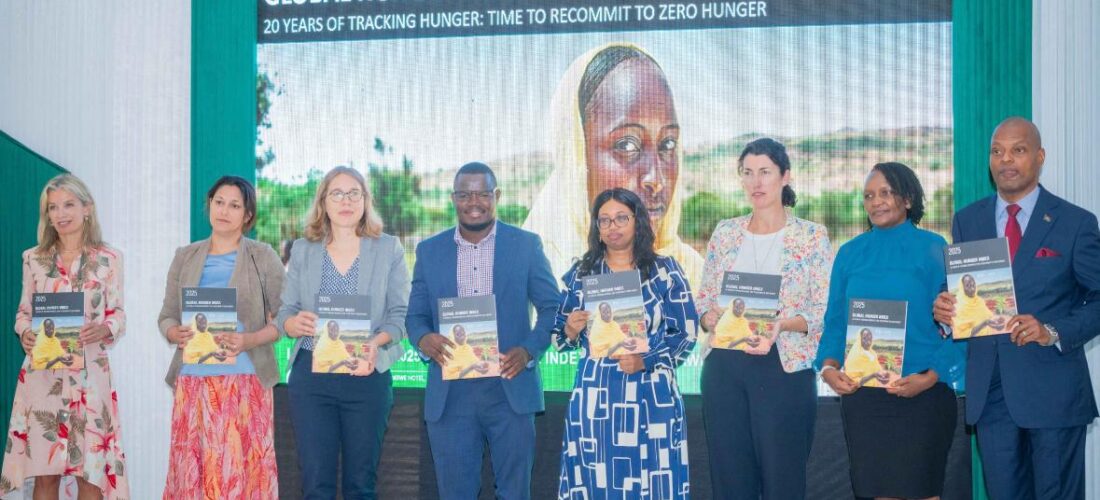
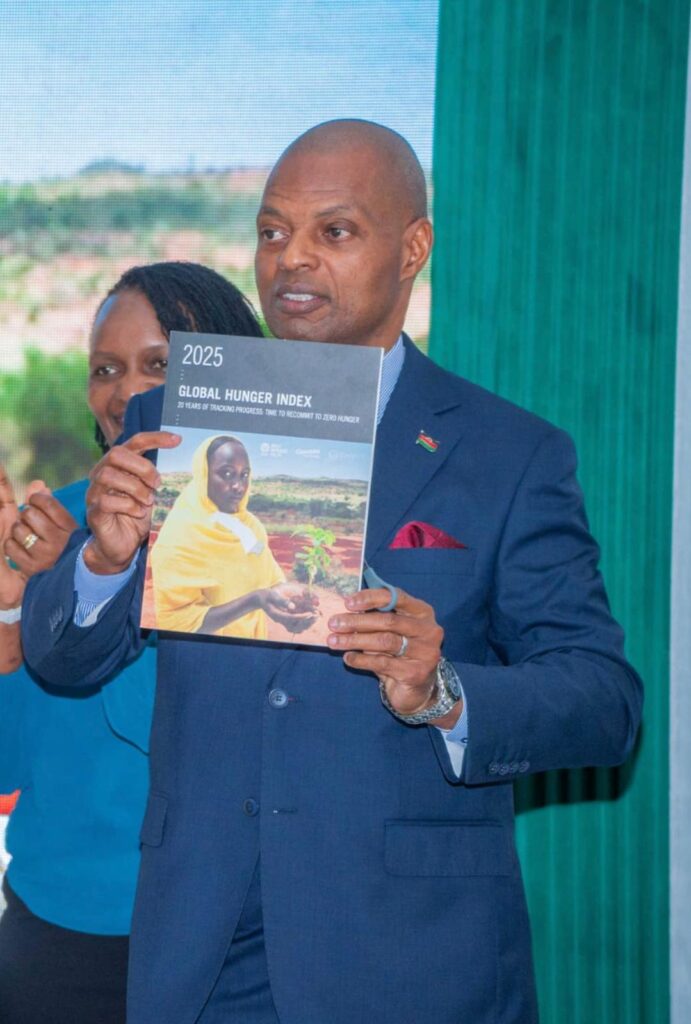
Principal Secretary (Administration) in the Ministry of Agriculture, Bennett Nkasala, announced the shift on Wednesday during the launch of the 2025 Global Hunger Index (GHI) by Welthungerhilfe (WHH) and the Food Systems Assessment Report by Concern Worldwide.
Nkasala said the new approach recognizes that increasing agricultural production alone does not guarantee food availability or improved nutrition.
“This demonstrates a change in philosophy,” he said. “We are moving away from looking at agriculture in isolation and toward a food systems approach that addresses every link in the chain, from soil health and seed diversity to market efficiency and the nutritional value of food consumed.”
He stressed that achieving Zero Hunger by 2030, as outlined in Sustainable Development Goal (SDG) 2, will require more than business-as-usual strategies.
“For many years, our efforts have focused narrowly on production,” Nkasala said. “While important, this has not adequately addressed persistent challenges such as limited access to food, poor nutrition outcomes, weak markets, and vulnerability to climate and economic shocks.”
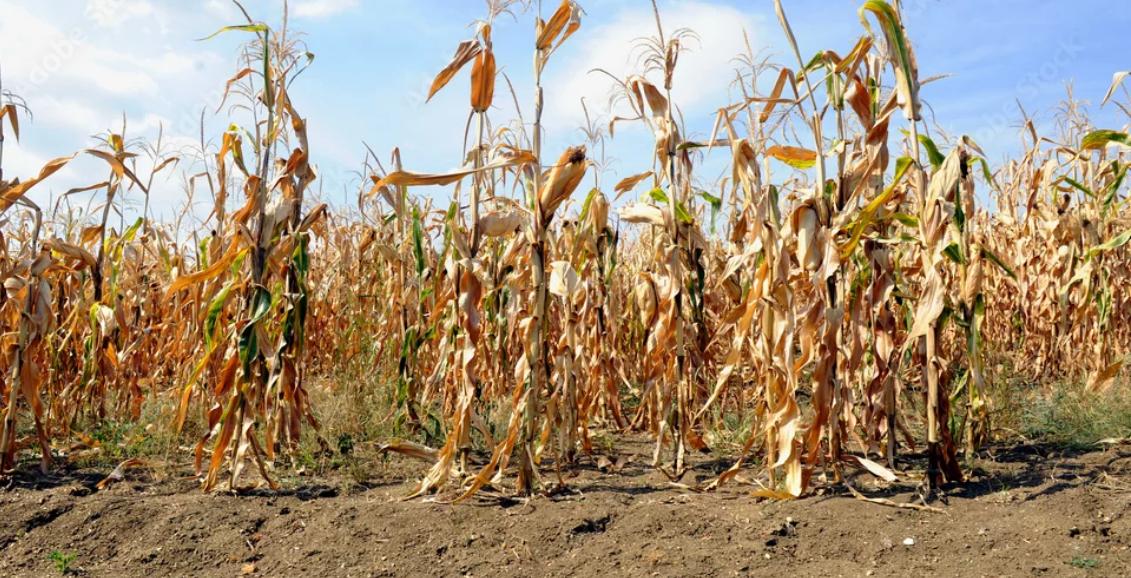
Despite progress in areas such as child health, he warned that gains remain fragile. About 30 percent of Malawi’s population continues to face food insecurity, largely driven by climate-related shocks and economic instability.
“After 20 years of tracking progress on ending hunger, it is time to recommit to zero hunger,” he said. “These reports are not just collections of data, they reflect the lived realities of millions, both globally and here in Malawi.”
As part of the shift, the Ministry of Agriculture is strengthening coordination across sectors. Nkasala said a joint leadership framework has been established between the Ministry of Agriculture, Irrigation and Water Development and the National Planning Commission to align policies across agriculture, trade, health, environment, and finance.
“This ensures that food systems become the heartbeat of national development,” he said. “We are institutionalizing governance so that all sectors move in the same direction.”
He added that global conflicts, climate change, and rising input costs have further exposed weaknesses in food systems, underscoring the need for investment in irrigation, climate-smart technologies, and diversified value chains.
Welthungerhilfe Country Director Susan Bipa described the GHI launch as a call to action for all stakeholders.
“It is an opportunity for government, development partners, civil society, and the private sector to work together more intentionally,” she said. “Ending hunger is a shared responsibility, and no single institution can achieve it alone.”
Bipa said the GHI should be seen not just as a diagnostic tool, but as a mechanism for accountability and action.
“It helps track progress, identify challenges, and trigger action,” she said, urging stakeholders to accelerate efforts. “Hunger and malnutrition persist not because we lack policies, but because we often fail to translate them into real change at community level.”
She emphasized the need to close the gap between policy design and implementation, calling for functional markets that support farmers and policies that deliver tangible results where they are needed most.
“There are gaps we already understand and can address,” Bipa said. “But evidence alone is not enough—what matters is what we do next.”
She also highlighted the importance of sustained long-term and short-term interventions, consistent policy implementation, and strong partnerships. She urged the media to continue reporting on hunger and nutrition to keep the issue high on the policy agenda.
Concern Worldwide Executive Director (UK), Sayyeda Salam, echoed similar sentiments, noting that the District Food Systems Assessment — focused on Mangochi and Mchinji districts — shows that past efforts have overly concentrated on boosting production.
“Malawi has made significant strides in increasing agricultural output, but this is not enough,” Salam said. “Hunger is not simply a production problem, it is a systems problem.”
She urged stakeholders to move beyond isolated interventions and instead build functional, inclusive food systems. This, she said, requires understanding systemic challenges, identifying practical solutions, and working collectively across sectors.
Salam called on government to integrate district-level insights into national policies, while urging development partners to invest in resilient infrastructure and long-term transformation. She also encouraged the private sector to play a more active role in building inclusive and efficient markets.
“Hunger is not inevitable,” she said. “It is the result of policy choices, system performance, and collective action or inaction.”
She added that while progress over the past two decades shows that change is possible, it is not guaranteed.
“By grounding our actions in evidence and committing to system-wide transformation, Malawi has the opportunity to turn its food systems into a driver of better nutrition, sustainable livelihoods, and long-term resilience,” Salam said.
The Global Hunger Index is a tool used to measure and track hunger at global, regional, and national levels. The 2025 theme — “20 Years of Tracking Progress: Time to Recommit to Zero Hunger”— highlights concerns that progress has stalled since 2016, putting the 2030 target at risk.
GHI scores are calculated using four indicators: undernourishment, child stunting, child wasting, and child mortality, many of which remain above international targets in several regions, including Malawi.
—
Also Read: Energy minister outlines recovery plan as Malawi feels impact of Tanzania unrest
Related: Hunger drove Malawi elections: Mutharika targets food, fuel, fertilizer first
Related: Agriculture ministry seeks bigger budget for food security