By Edwin Mauluka
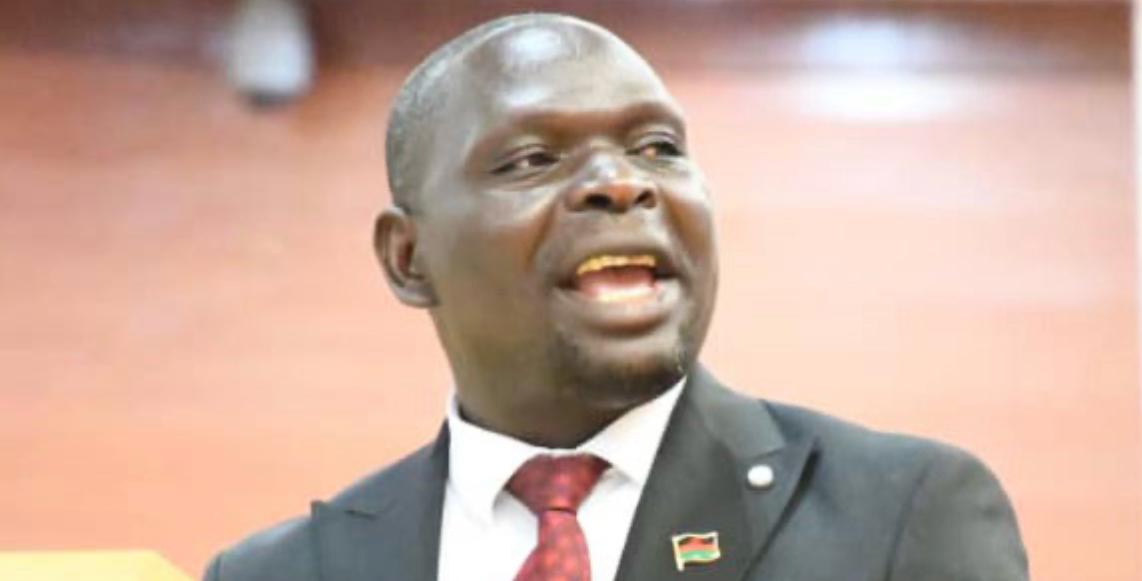
Malawi’s governing Democratic Progressive Party (DPP) risks losing the next election if it fails to respond to the hardships facing citizens, Leader of Opposition in Parliament Simplex Chithyola Banda has warned.
Chithyola, a member of the former ruling Malawi Congress Party (MCP), delivered the cautionary message in Parliament just before the House adjourned indefinitely.
“I would like to remind the government that if it does not listen, it risks the same fate we faced,” he said. “We were in government and learnt a bitter lesson—if you don’t listen, people will vote you out in 2030.”
His remarks followed what he described as a “genuine appeal” for the government to adopt measures to ease the economic strain on Malawians and prevent further deterioration.
Among his key proposals was a call to review the automatic fuel pricing mechanism (APM), which he said is placing a heavy burden on citizens. He suggested a more gradual and predictable pricing system that reflects prevailing economic conditions and informed monetary policy decisions.
Chithyola also urged the government to abandon austerity measures that have frozen employment and promotions in the public sector. He called for greater transparency on the staff monitoring programme with the International Monetary Fund (IMF), describing it as critical to debt management and economic stability.
On agriculture, he advised the government to drop plans to import so-called mega farmers and instead invest in empowering local farmers to increase productivity. He also pressed the Ministry of Agriculture to urgently announce farm-gate prices, warning that vendors are already exploiting farmers by buying crops at low prices.
He further proposed a special budget allocation for maize procurement, noting that many farmers are likely to record poor harvests this season.
Addressing challenges in higher education, Chithyola called for public-private partnerships (PPPs) to construct student hostels across university campuses. He said this would ease accommodation shortages while reducing cases of abuse and harassment linked to inadequate housing.
Chithyola argued that his proposals are aimed at improving governance and correcting what he described as a troubling trajectory in the first six months of the current administration.
“In the past six months, we have seen unprecedented levels of maladministration in a number of areas,” he said.
He cited the introduction of what he termed punitive taxes—including levies on mobile money, bank transactions, VAT, withholding taxes and even excise duty on coffins—as contributing to the rising cost of living.
“Malawians are facing untold suffering,” he said. “Despite attempts to control maize prices, skyrocketing fuel costs have worsened the burden. Even civil servants are now walking to work.”
He added that increased rental charges in government houses under the Malawi Housing Corporation (MHC) have further strained already stretched household incomes.
The opposition leader also raised concerns over national security, pointing to rising cases of robbery, kidnapping and serial killings.
On corruption, Chithyola expressed disappointment that Parliament adjourned without resolving concerns surrounding the controversial MWK128 billion Amaryllis Hotel purchase by the Public Service Pensions Trust Fund (PSPTF). He warned that corruption is becoming normalized, with wrongdoers celebrated while those with integrity are sidelined.
He also called on President Peter Mutharika to dismiss officials who have failed to develop guidelines for the reformed Constituency Development Fund (CDF).
“The President has shown commitment by allocating MWK5 billion per constituency, but the absence of guidelines exposes the fund to abuse,” he said.
Despite his criticism, Chithyola acknowledged some positive steps taken by the administration, noting a more decisive leadership style compared to Mutharika’s first term.
He praised policies in the mining sector, particularly the ban on exporting unprocessed minerals and increased budget allocation, saying these could boost job creation and add value to Malawi’s resources.
He also commended efforts to address hunger and reduce food inflation, as well as measures to cut domestic borrowing and enforce fiscal discipline.
“Managing fiscal policy in times of economic turmoil is not easy,” Chithyola said. “These efforts are commendable.”
However, he stressed that without urgent action to address the cost of living and governance concerns, the government risks losing public trust—and ultimately, power.
—
Also Read: MPs demand CDF guidelines as K5 billion fund rolls out
Related: Malawi opposition MPs pressure DPP govt for tough economic reforms
Related: Malawi parliament adjourns sine die as Speaker warns chronic absentee MPs