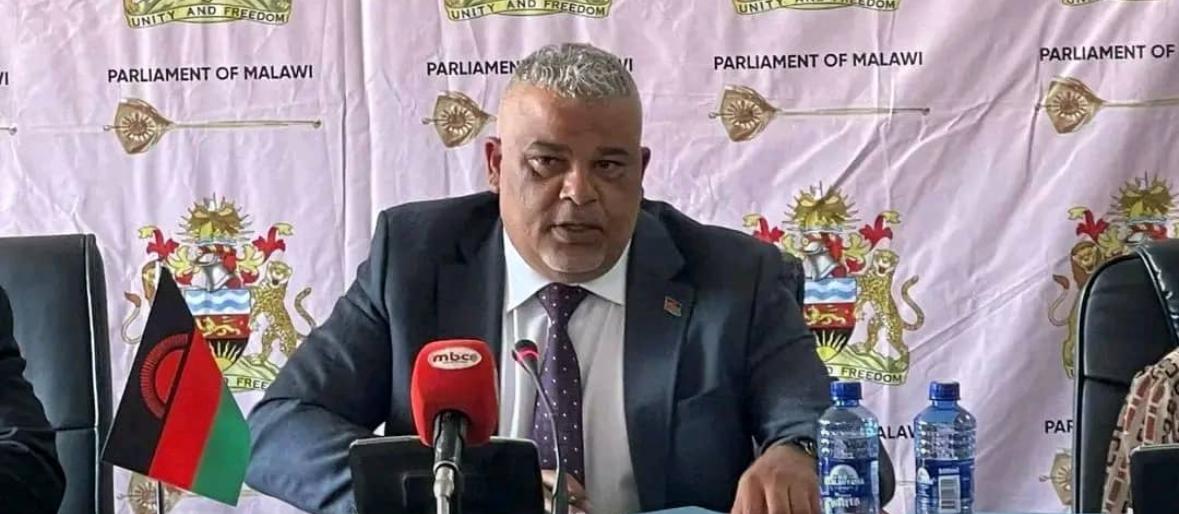

Speaker Sameer Suleman’s dispute with DPP officials should not be reduced to party politics. Malawi needs a Parliament confident enough to scrutinise government — and an Executive mature enough to welcome accountability.
OPINION | Governance | By Chifipa Mhango
Malawi’s current political debate surrounding Speaker of Parliament Sameer Suleman raises a question that goes beyond personalities and party politics: Can a senior member of a governing party raise legitimate concerns about governance without those concerns being interpreted as an attack on the government he helped bring to power?
The answer should be yes.
The disagreement between the Speaker and some officials within the Democratic Progressive Party (DPP) deserves to be approached with maturity, restraint and, above all, an appreciation of Malawi’s constitutional institutions. This is particularly important because Suleman is not an opposition politician. He is a member of the governing DPP.
The debate, therefore, should not be reduced to the familiar narrative of opposition versus government. It is better understood as a question of how a governing party, its Members of Parliament and the institutions of State should interact in pursuit of good governance.
Indeed, Suleman’s DPP membership makes the debate more significant, not less.
Party membership should not automatically invalidate concerns raised about governance. If anything, his position presents an opportunity for the governing party to demonstrate that political loyalty does not require silence when institutional weaknesses are identified.
Once elected to preside over the National Assembly, the Speaker assumes responsibilities that extend beyond ordinary party politics. His role includes protecting the integrity, independence and effectiveness of Parliament.
That does not mean the Speaker should become an alternative centre of executive authority. He should not. Parliament cannot and should not attempt to run Ministries, departments or public enterprises.
But Parliament is equally not expected to sit quietly while the Executive governs. Its role includes legislation, representation and oversight. The Executive governs; Parliament scrutinises. Both functions are essential to a functioning democracy.
“Concerns raised by the Speaker about governance need not contradict the President’s agenda. They could, in fact complement it. A strong President needs a strong Parliament.”
This distinction is particularly important in the context of President Arthur Peter Mutharika’s inaugural address of 4 October 2025.
The President did not present Malawi as a country enjoying comfortable economic circumstances. He spoke about an economy facing serious challenges, including shortages, high borrowing and concerns about the management of public resources. Most importantly, he made a strong political commitment to restoring discipline and fighting corruption.
He told Malawians that the country needed hard work and difficult decisions and declared that the era of “looting government” was over.
That commitment should be taken seriously. But an anti-corruption and governance agenda cannot be implemented by the President alone.
It requires Ministers and public officials willing to acknowledge and correct weaknesses. It requires professional civil servants, effective regulatory and auditing institutions, and — critically — a Parliament prepared to ask difficult questions about how public resources and institutions are being managed.
Seen from this perspective, concerns raised by the Speaker about governance need not contradict the President’s agenda. They could, in fact, complement it.
A strong President needs a strong Parliament.
There is a tendency in African politics to equate a strong government with a Parliament that rarely challenges it. That is a misunderstanding of institutional strength.
A genuinely strong government should be able to withstand scrutiny. A strong President should be able to say: if there are weaknesses in government, let Parliament identify them and let us fix them.
That does not weaken presidential authority. It strengthens it.
If President Mutharika has committed himself to restoring accountability, parliamentary oversight should be seen as one of the tools that can help identify where government systems are failing.
The alternative is more dangerous. If officials become afraid to report weaknesses because they fear political consequences, problems can remain hidden until they develop into financial, institutional or political crises.
Oversight, therefore, should not be viewed as an instrument belonging exclusively to the opposition. It belongs to Parliament as an institution.
And parliamentary oversight is about much more than political rhetoric. It encompasses government programmes, public expenditure and the performance of public institutions. The Public Accounts Committee, for example, has an important role in examining audited public accounts and assessing whether public expenditure was properly authorised, lawful and consistent with financial controls.
When Parliament asks why a public institution is underperforming, why expenditure is rising, why a programme is failing to deliver, why procurement is problematic, why a State-owned enterprise is accumulating losses, or why public resources are not producing expected results, it is not necessarily attempting to take over the Executive’s responsibilities.
It is performing oversight.
For Malawi, that is not a luxury. It is an economic necessity.
Every kwacha lost through weak financial controls, inefficient procurement, unnecessary expenditure or poor institutional management is a kwacha that could otherwise support health, education, agriculture, infrastructure, energy or economic development.
Governance, therefore, is not simply a political question. It is an economic one.
Investors care about institutional predictability. Development partners care about public financial management. Creditors care about fiscal discipline. Businesses need regulatory certainty. Citizens want to know whether public money is being translated into public services.
When Parliament raises questions about governance, it is consequently also raising questions about Malawi’s economic future.
The DPP’s concerns, however, should not simply be dismissed.
A political party that has won an election has a legitimate interest in protecting the mandate given to it by voters. It is understandable that party officials may be concerned if they believe statements by senior party members could undermine public confidence in government.
But the DPP has an opportunity to take the debate further. Instead of asking only whether the Speaker’s statements politically benefit or damage the party, it could ask a more important question: Are the underlying governance concerns valid?
If they are not, evidence and institutional processes should establish that.
If they are, then government has been given an opportunity to correct them. That should not be considered political defeat. It should be considered good governance.
Party loyalty and constitutional duty can coexist.
A DPP Member of Parliament can support President Mutharika while asking why a particular government programme is failing. A DPP parliamentarian can support the government’s economic programme while questioning expenditure. A parliamentary committee can summon officials to explain weaknesses in a public institution without becoming an opposition committee.
Likewise, the Speaker can defend Parliament’s institutional authority while remaining affiliated to the governing party.
That is not necessarily disloyalty. It is parliamentary democracy.
At the same time, support for the Speaker’s constitutional role should not amount to a blank cheque. The Speaker occupies one of the country’s most sensitive constitutional offices. His interventions should therefore be measured, evidence-based and grounded in institutional procedure.
Where concerns relate to specific Ministries, departments or public entities, Parliament has mechanisms through which they can be examined. Questions can be asked. Committees can investigate. Ministers can be summoned. Reports can be produced and recommendations made.
Where allegations potentially involve criminal conduct, the appropriate investigative and judicial institutions should be allowed to determine the matter.
“Malawi should avoid turning institutional disagreements into personal battles. The more important question is: Are Malawi’s institutions becoming stronger as a result of this debate.”
The Speaker’s strongest position, therefore, is not simply to make public statements. It is to ensure that Parliament’s institutional machinery converts legitimate concerns into evidence-based scrutiny and, ultimately, corrective action.
Malawi should also avoid turning institutional disagreements into personal battles.
The question should not be: Who is winning — the Speaker or the DPP?
The more important question is: Are Malawi’s institutions becoming stronger as a result of this debate?
Malawi needs stronger institutions, not stronger political personalities. It needs public officials who can disagree respectfully. It needs a Parliament capable of scrutinising government without attempting to govern. And it needs an Executive confident enough to accept scrutiny without interpreting every question as hostility.
Perhaps the most constructive way forward is to return to President Mutharika’s own message at his inauguration.
He promised Malawians hard work, difficult decisions and an end to the abuse of government.
Those are not merely presidential responsibilities. They are national responsibilities.
The Speaker can contribute by ensuring effective parliamentary oversight. The DPP can contribute by supporting institutional accountability while maintaining appropriate party discipline. The Executive can contribute by responding constructively to legitimate parliamentary questions. And Members of Parliament, regardless of party affiliation, can contribute by putting the national interest ahead of partisan considerations when exercising their constitutional functions.
There is no need for Malawi to choose between a strong President and a strong Parliament. The country needs both.
President Mutharika has a mandate to govern. The DPP has a mandate to support and implement its political programme. The Executive has a responsibility to deliver.
But Parliament has a constitutional responsibility to legislate, represent the people and exercise oversight.
The Speaker, as Parliament’s presiding officer, has a responsibility to protect that institutional role. His membership of the governing DPP should not make his governance concerns less legitimate. If anything, it gives Malawi an opportunity to demonstrate that political affiliation and institutional accountability can coexist.
To the DPP, the respectful advice is therefore this: do not necessarily see parliamentary scrutiny as an attempt to weaken your government. Use it as an opportunity to strengthen it.
To the Speaker: continue defending Parliament’s oversight mandate, but do so through evidence, constitutional procedure, institutional restraint and respect for the Executive’s distinct responsibilities.
If both sides approach the matter in that spirit, what currently appears to be a political disagreement could become something far more valuable — an opportunity to strengthen Malawi’s democratic institutions.
After all, the ultimate test of President Mutharika’s governance promise will not be whether his government is never criticised.
It will be whether, when weaknesses are identified, government has the confidence and institutional maturity to correct them.
That is not a weakness of government.
That is what good government looks like.
—
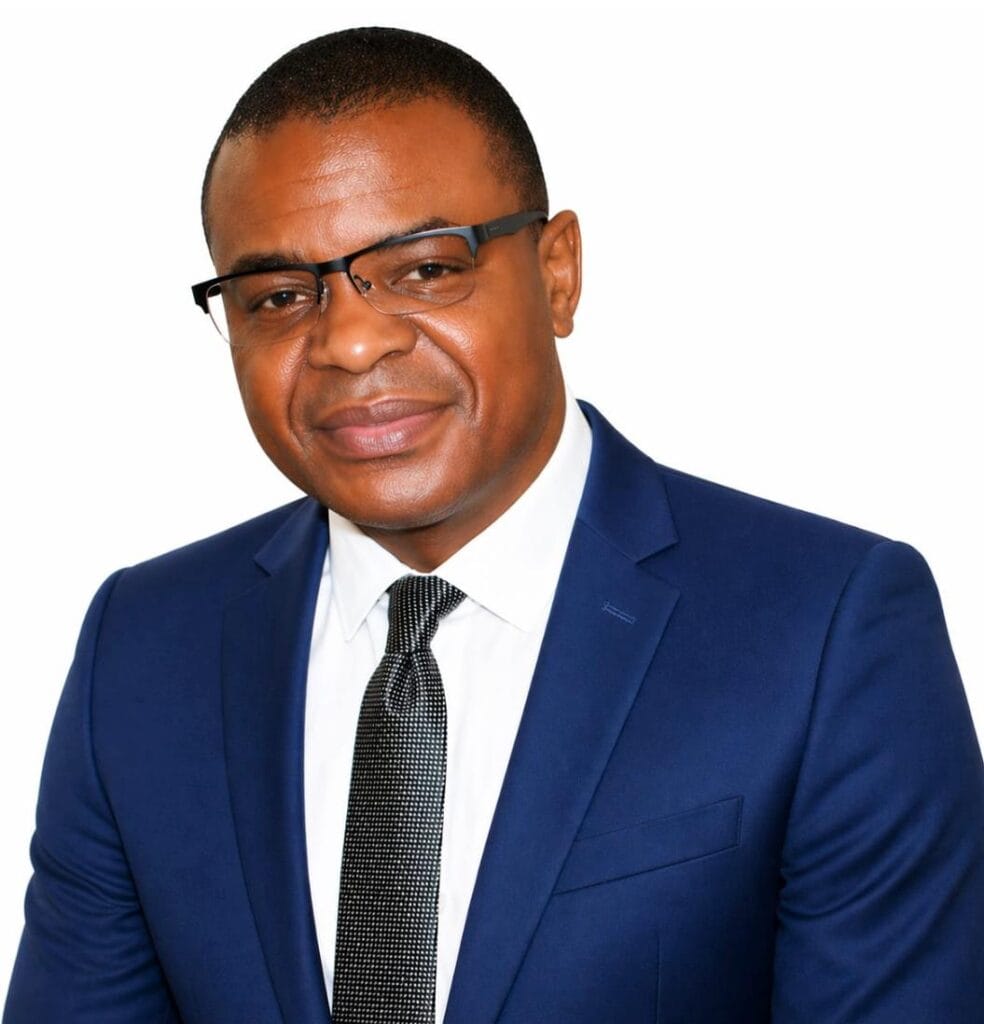
The author serves as Chief Economist and Executive Director at the Don Consultancy Group in South Africa.