
By Edwin Mauluka
The Parliamentary Committee on Natural Resources, Energy and Climate Change has called on the government to diversify energy sources and scale up investment in the sector to resolve Malawi’s persistent electricity challenges.
The recommendations follow ongoing power outages and a recent oversight visit to Tedzani Hydropower Station, as well as engagements with the Electricity Generation Company Malawi Limited (EGENCO) and the Electricity Supply Corporation of Malawi (ESCOM).
Malawi currently generates only about half of the electricity needed to meet national demand, forcing frequent load shedding across the country.
Presenting the report in Parliament, committee chairperson Tiaone Hendry said the energy sector is under severe strain, with outages becoming routine despite rising demand driven by urbanisation, industrialisation and population growth.
“The truth is simple: our energy system is not growing at the same pace as our country. Recent developments clearly show that the electricity crisis is real, persistent and worsening,” Hendry said, adding that the problem has been neglected for years.
She noted that unreliable power supply is forcing businesses to operate below capacity, discouraging investment, and disrupting public services and daily life.
Hendry stressed the need to accelerate energy diversification and strengthen infrastructure resilience.
“We cannot continue to rely heavily on hydropower, which is high-risk. We must fast-track projects such as new solar plants, regional interconnections and the Mpatamanga project,” she said.
The committee warned that the widening gap between supply and demand, coupled with institutional inefficiencies, is trapping the country in a cycle of load shedding and economic stagnation. It added that decisive reforms and strategic investment could transform the sector into a driver of growth.
During its visit, the committee found that the Tedzani Hydropower Station—the backbone of Malawi’s electricity generation—is highly vulnerable to climate shocks. Silting caused by cyclones has reduced generation capacity by about 40 percent.
Financial constraints are also crippling the sector. ESCOM owes EGENCO approximately MWK31 billion, while foreign exchange shortages are delaying procurement of critical equipment.
Hendry revealed that EGENCO has failed to settle nearly US$14 million in bills to international suppliers, including about US$7 million for backup batteries for a solar power project in Salima. She called for priority forex allocation to support procurement of essential power equipment.
The committee also highlighted inadequate maintenance of ageing infrastructure, particularly at Tedzani I, II and III — commissioned in 1972, 1976 and 1995 respectively — alongside the newer Tedzani IV, commissioned in 2021.
On the distribution side, ESCOM continues to face persistent outages above acceptable thresholds, high system losses and ageing infrastructure. The committee also flagged serious financial instability caused by unpaid bills from public institutions.
Among major debtors, the Blantyre Water Board owes MWK21.8 billion, alongside arrears from the Ministry of Health, Airport Development Limited and the Malawi Defence Force.
The committee described it as unfair to expect ordinary Malawians to pay high tariffs on time when public institutions are failing to meet their obligations. It has since urged government entities to use approved utility budgets to clear outstanding arrears.
“If you fail to settle the arrears, this committee will recommend that your utility budget lines be removed and payments be made directly to service providers,” Hendry warned.
To improve revenue collection and reduce arrears, the committee recommended that ESCOM prioritise prepaid metering for all customers and ensure electricity levies support both generation and distribution.
It also urged ESCOM to invest in its own office infrastructure, noting that the utility has operated in rented premises since its Blantyre head office was destroyed by fire more than a decade ago.
The committee further called on lawmakers to take responsibility for transforming the energy sector into a catalyst for economic growth, industrialisation and improved livelihoods, warning that energy insecurity is now directly translating into economic insecurity.
Seconding the report, Lilongwe Kamphuno MP Grace Chunga said the findings reflect the daily reality faced by Malawians.
“Our nation continues to face a significant power deficit, and the challenges are worsening. Climate-related events such as cyclones have already reduced generation capacity, showing that our infrastructure is not resilient,” she said.
Chunga also stressed the need for financial discipline among public institutions, warning that unpaid bills are creating a vicious cycle in which ESCOM cannot meet its obligations and EGENCO cannot invest.
“Ultimately, the nation suffers. This is not just an administrative issue; it is a governance issue,” she said.
In his maiden speech, newly elected Rumphi Central MP Mathews Mtumbuka said many of the challenges raised by the committee have persisted for decades, underscoring the urgency of action.
“As an engineer, I know it takes at least five years from concept to power generation. If we are serious about driving mining and industrialisation, we must urgently act on these recommendations,” he said.
Mtumbuka also highlighted development challenges in his constituency, including limited access to schools and health facilities, high input costs for farmers, and poor road networks affecting market access.
He called for unity in addressing Malawi’s broader economic challenges, including high public debt, rising living costs and limited job opportunities.
“These challenges require unity, innovation and decisive action,” he said, urging leaders to move from rhetoric to implementation on industrialisation, food security, environmental protection and the fight against corruption.
—
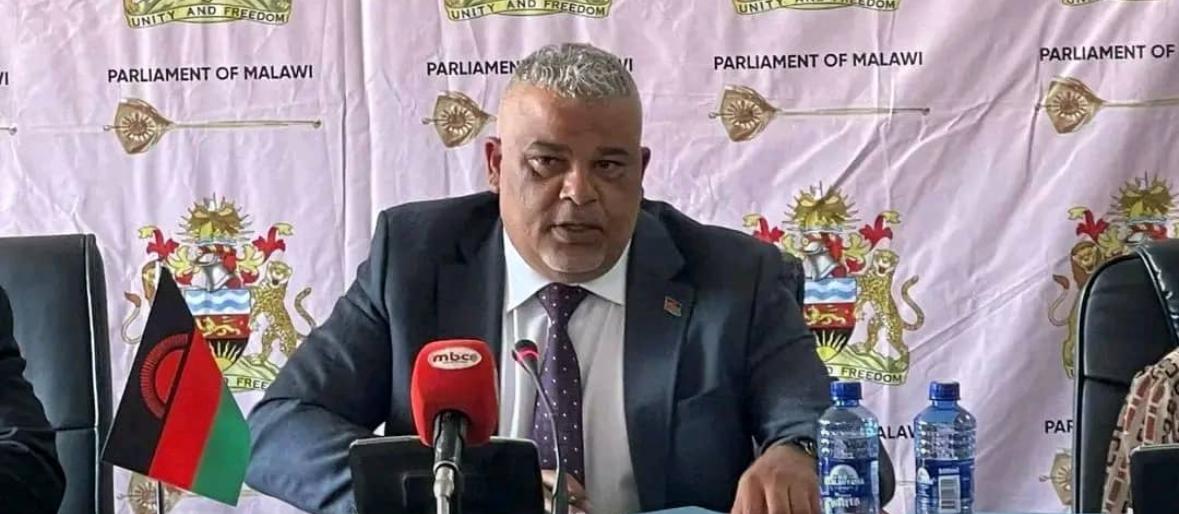
Tiaone Hendry in photo above
Also Read: MERA approves 12% electricity tariff hike as ESCOM seeks to stabilise power supply
Related: Energy minister outlines recovery plan as Malawi feels impact of Tanzania unrest
Related: Lights out? Escom threatens blackouts while MEC declares readiness