
By Edwin Mauluka
The Malawi government has announced significant increases in rental charges for public housing estates, citing rising maintenance costs and the need to ensure sustainable property management.
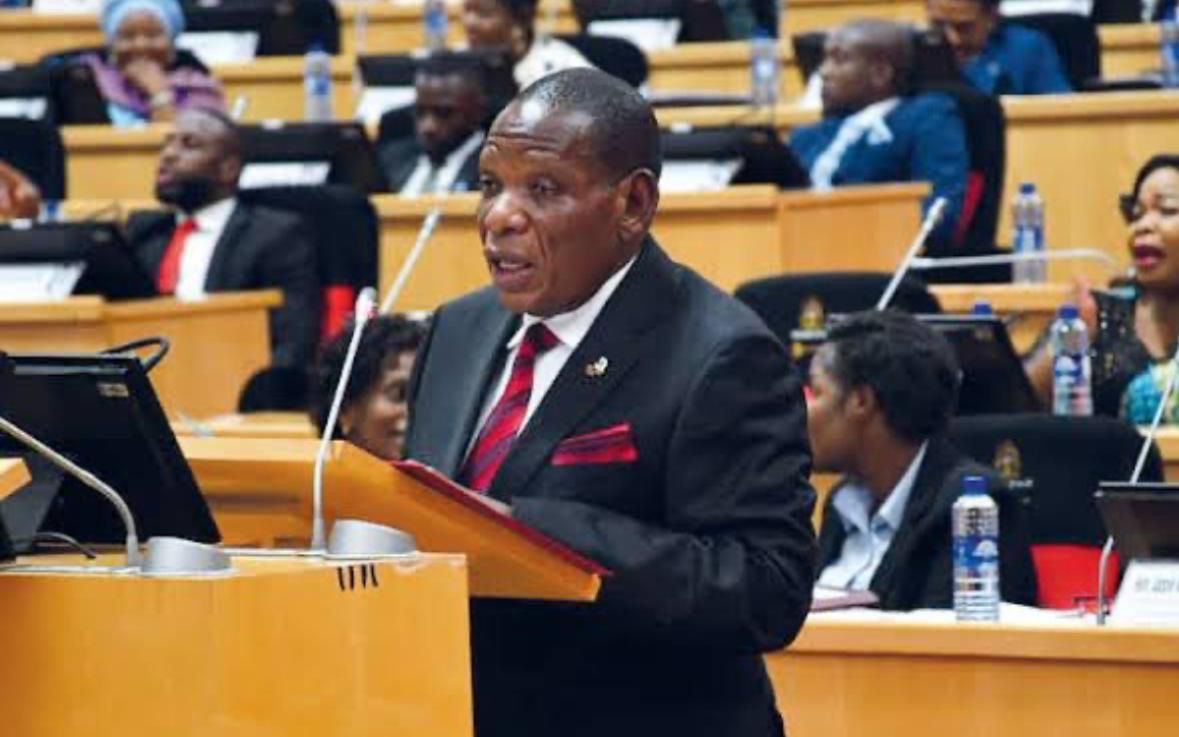
Minister of Lands, Housing and Urban Development, Chimwemwe Chipungu, made the announcement in Parliament on Tuesday while delivering a ministerial statement on the administration of public housing estates. The adjustments will affect properties managed by both the Department of Housing and the Malawi Housing Corporation (MHC).
Chipungu said the move is intended to align rental rates with prevailing economic conditions, noting that current charges have remained far below market levels despite a sharp increase in the cost of maintaining the properties.
“Despite the skyrocketing cost of managing and maintaining these properties, the rentals charged by public institutions remain significantly low, making their administration uneconomical,” he said.
He added that in many cases, comparable properties in the private sector are rented at double or even triple the rates charged by government institutions.
The minister explained that the mismatch between income and expenditure has constrained the government’s ability to expand housing stock and adequately maintain existing units. As a result, construction of new houses has lagged behind growing demand, while the condition of many properties has deteriorated.
“Rentals are the primary source of funds for maintenance and management. When these are too low, it becomes difficult to sustain operations or invest in new housing units,” Chipungu said.
Under the new measures, rental charges for houses managed by the Department of Housing will increase by an average of 65 percent, effective April 1, 2026. Chipungu acknowledged that the percentage increase may appear steep but said it reflects the very low base from which current rentals are set.
The affected properties are mainly located in low-density areas such as Area 12, Area 10, and Area 11 in Lilongwe, as well as Nyambadwe and Limbe in Blantyre. Currently, monthly rentals for these houses range between MWK160,000 and MWK715,000, while similar properties in the same areas under private ownership command between MWK600,000 and MWK2.5 million.
Meanwhile, rentals for properties managed by the Malawi Housing Corporation will increase by an average of 30 percent, with the new rates taking effect on May 1, 2026.
Chipungu emphasized that the adjustments are not intended to fully match market rates but rather to establish “economically realistic” pricing that can support sustainable management of public housing.
“The goal is to strike a balance between our responsibility to provide decent and affordable housing and our obligation to ensure prudent use of public resources,” he said.
In addition to rent increases, the government has introduced stricter enforcement measures to improve compliance among tenants. These include mandatory advance rental payments and penalties for arrears.
According to the minister, tenants who accumulate rent arrears beyond 30 days will face enforcement actions, including possible eviction.
“This strategy is aimed at preventing tenants from accumulating unsustainable levels of debt,” he said.
The government will also introduce an annual rent review mechanism to ensure gradual and predictable adjustments going forward. For MHC properties, the billing system will shift from the current anniversary-based model—where rent adjustments depend on an individual tenant’s date of occupancy—to a conventional system in which all rentals are reviewed on a fixed date each year.
Starting in 2026, rent reviews will be conducted on April 1, with implementation taking effect on May 1 to allow sufficient notice to tenants.
Chipungu attributed the reforms to a combination of factors undermining the sustainability of public housing. These include rising inflation, increasing costs of utilities and maintenance, and widespread non-compliance by tenants with tenancy agreements.
He revealed that rental arrears currently average about two months, with some tenants owing several years’ worth of unpaid rent. The minister also cited political interference, alleging that some politically exposed persons use their influence to evade compliance or intimidate housing officials.
“Some tenants neglect the properties they occupy, leaving them in poor condition and increasing the cost of rehabilitation,” he said.
He further pointed to weak enforcement of tenancy agreements as a longstanding challenge that has contributed to inefficiencies in the system.
The minister said the reforms are designed to improve maintenance, strengthen compliance, and enhance monitoring of tenants to ensure adherence to contractual obligations.
“Unless urgent reforms are implemented, the administration of public housing estates will remain unsustainable, and we risk losing some units as they become uninhabitable,” Chipungu warned.
He urged all tenants, including politically exposed individuals, to cooperate with the new measures and settle any outstanding arrears promptly to avoid enforcement actions.
Currently, the Department of Housing manages 228 billable houses in Blantyre and Lilongwe, while the Malawi Housing Corporation oversees approximately 6,400 properties across the country.
The ministerial statement came shortly after Parliament passed five key money bills aimed at facilitating the implementation of the 2026/2027 National Budget, which was approved on March 24, 2026. These legislative measures are expected to strengthen revenue collection, enhance tax administration, and support broader economic reforms.
—
Also Read: Parliament to grill Lands Ministry over land law gaps, governance failures
Related: Malawi 2026/27 Budget: MWK1.28 trillion education allocation excites universities, stakeholders
Related: Malawi 2026/27 Budget Meeting Guide: Key dates, process and priorities