
Demand soars as cities need over 100,000 homes, but fewer than 1,000 are built each year
By Edwin Mauluka
The Parliamentary Committee on Lands, Transport and Public Infrastructure plans to engage the Ministry of Lands, Housing and Urban Development to address persistent challenges in land administration, governance and policy implementation.
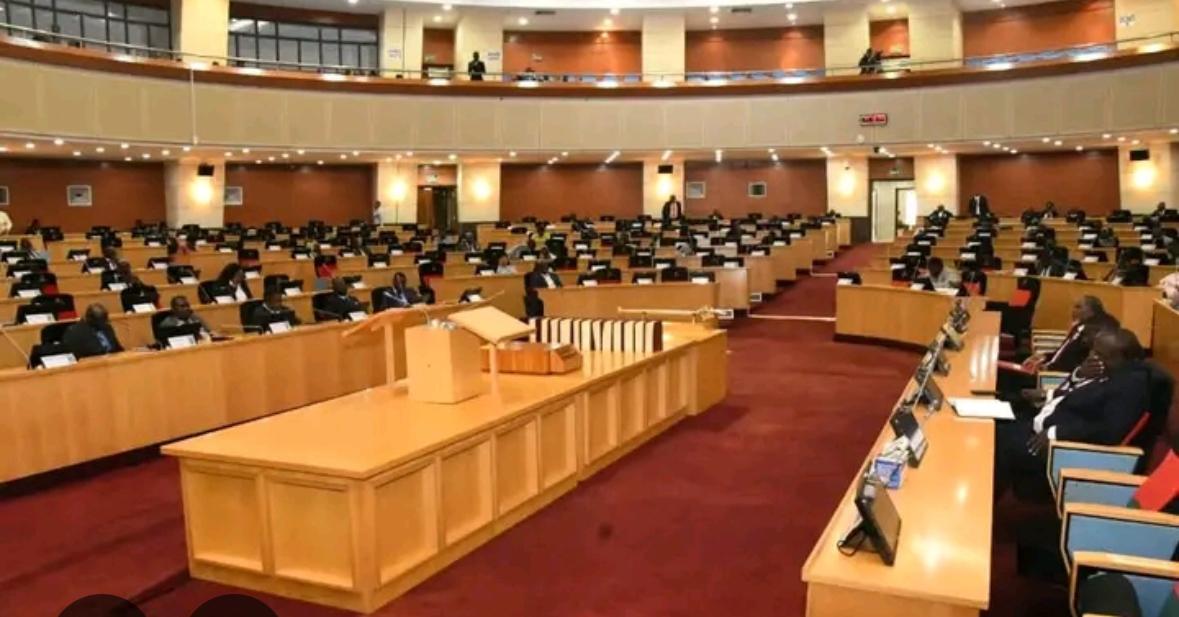
Vice chairperson of the committee, Lincoln Liwonde, who is also Member of Parliament for Lilongwe City M’buka, said this after a meeting with Real Estate Talk Mw and Eris Properties at Parliament in Lilongwe.
During the engagement, the two organisations outlined key challenges affecting the sector, including weaknesses in land administration and governance, real estate development constraints, and emerging policy gaps in existing land laws.
Liwonde said many of the concerns raised were legislative or policy-related and therefore required direct engagement with the responsible ministry.
“You may have noticed that most of the concerns are legislative or policy in nature, which cannot be addressed by the committee alone at this point. Because of that, next time we will engage the ministry as a team,” he said, while assuring the stakeholders that other issues raised would also be followed up.
Real Estate Talk Mw is a digital awareness platform aimed at helping the public better understand real estate issues, including land laws, property development and planning.
Liwonde commended the platform for promoting public awareness of land legislation through digital platforms, noting that the initiative was benefiting many Malawians, including members of Parliament who were previously unfamiliar with some legal provisions.
In its presentation, Real Estate Talk Mw warned that weak enforcement of land laws and failure to update outdated legislation continue to fuel land administration challenges across the country.

The company’s managing partner, Atusaye Kanyenda, said although Malawi amended several land laws in 2022, there is still widespread lack of awareness and enforcement, leading to the proliferation of fraudsters posing as legitimate real estate agents.
“There is a general lack of enforcement, which has resulted in people stealing and selling land under the guise of being registered agents,” Kanyenda said.
He further noted that implementation of customary land laws remains weak, particularly in the adjudication process, which involves identification, confirmation, surveying and registration of land.
“As we speak today, we have more than 20 districts, but fewer than five have started the adjudication process. The fear is that by the time the process is completed in those few districts, land in the remaining districts may already have been sold illegally,” he said.
Kanyenda also pointed to gaps within the customary land law, particularly regarding the use of customary land as collateral for bank loans.
“While the law restricts the sale of customary land, it allows landowners to use it as collateral. If a borrower defaults and the land cannot be disposed of, how do banks recover their money? There is a need for policy direction and oversight,” he said.
He further called for policy guidance on the Section of Titles Act, which governs ownership of sections within buildings, proposing incentives such as construction waivers similar to those offered in the tourism sector.
“If applied to the housing sector, the Section of Titles Act could help address the housing crisis by incentivising investors in construction,” Kanyenda said.
Real Estate Talk Mw researcher, Eda Mkombezi, said effective enforcement of enacted land laws would benefit the country and expressed hope that parliamentary oversight would play a critical role in addressing the issues raised.
Mkombezi also warned that growing demand for land in urban areas has fuelled informal land markets, where plots are subdivided without planning approval, contrary to the Physical Planning Act.
She observed that despite the existence of a comprehensive planning framework under the National Physical Development Plan, many developments continue without approval, largely due to weak enforcement.
“Our guiding framework was last updated in 1987, yet we are currently working towards the Sustainable Development Goals, which end in 2030. Are we really using such an outdated document to address challenges in 2026?” she asked.
According to Mkombezi, poor implementation of land laws has also contributed to the housing crisis in cities, with urbanisation rates estimated at 20 percent and annual growth reaching 41 percent, far outpacing housing supply growth of 25 percent.
She said the Malawi Housing Corporation has failed to keep up with demand, leaving housing provision largely in the hands of the informal sector.
“For example, Blantyre alone will require 105,036 housing units by 2039. To meet current demand, Malawi Housing would need to build 28 houses per day, yet in reality we struggle to reach even 1,000 units per year,” she said.
Mkombezi added that pressure for housing has pushed demand for residential land beyond city boundaries, a trend she warned could eventually lead to displacement of communities and worsen living conditions for the urban poor.
She further linked weak enforcement of land laws to poor revenue collection by councils, as many revenue streams are controlled by informal landlords.
“This is why we see poorly planned settlements that expose cities to disasters, as people end up living in flood plains and hillsides. We need to prioritise resilient housing, starting with the urban poor,” she said.
Meanwhile, Head of Property Management at Eris Properties, Taweni Lungu, said planning, zoning and approval processes remain lengthy and unpredictable due to inconsistent interpretation and enforcement of regulations.
She called for certainty and transparency in planning and zoning decisions to reduce speculative risk and escalating financing costs.
“Predictable, time-bound approvals and a stable policy environment are essential for lender confidence. Delays translate into higher interest costs or stalled projects because time equals money,” Lungu said.
Malawi amended its land laws in 2022, building on legislation enacted in 2016, including amendments to the Land Survey Act, Physical Planning Act, Registered Land Act, Land Acquisition and Compensation Act, and the Customary Land Act.
—
Also Read: Parliament sends indigenous language petition to Legal Affairs Committee
Related: Esau ‘Black Mamba’ Kanyenda remembered in parliament after cancer battle
Related: Malawi Parliament okays $60.7m for Northern Region roads, water systems