
By The Forum
With less than 50 days to Malawi’s general elections, a new poll by the Institute of Public Opinion and Research (IPOR) has stirred political waters, showing weak support for the ruling Malawi Congress Party (MCP) and a strong lead for opposition Democratic Progressive Party (DPP).
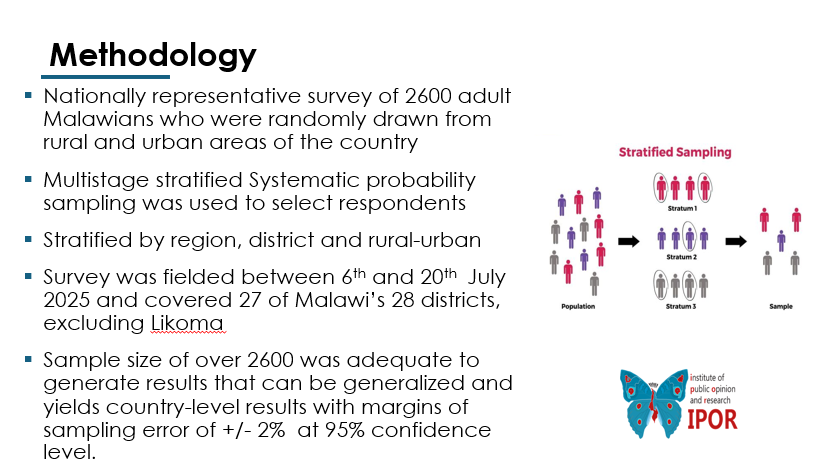
The survey, conducted between July 6 and 20 across 27 districts and involving over 2,600 respondents, found that among 95 percent of likely voters, former president Peter Mutharika of the DPP leads with 43 percent. Incumbent President Lazarus Chakwera (MCP) trails at 26 percent. UTM’s Dalitso Kabambe garnered 5 percent, UDF’s Atupele Muluzi 2 percent, and former president Joyce Banda of PP just 1 percent. Twelve percent of respondents said they were undecided, while 6 percent refused to answer.
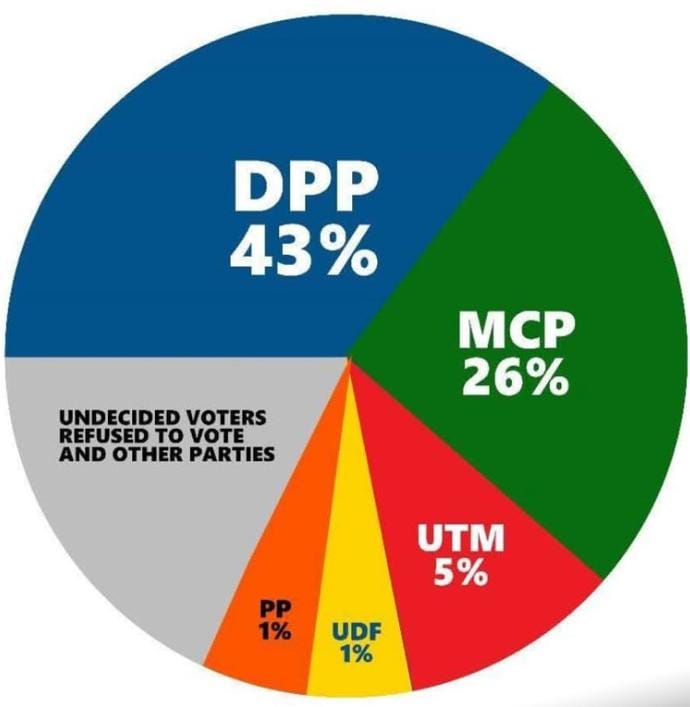
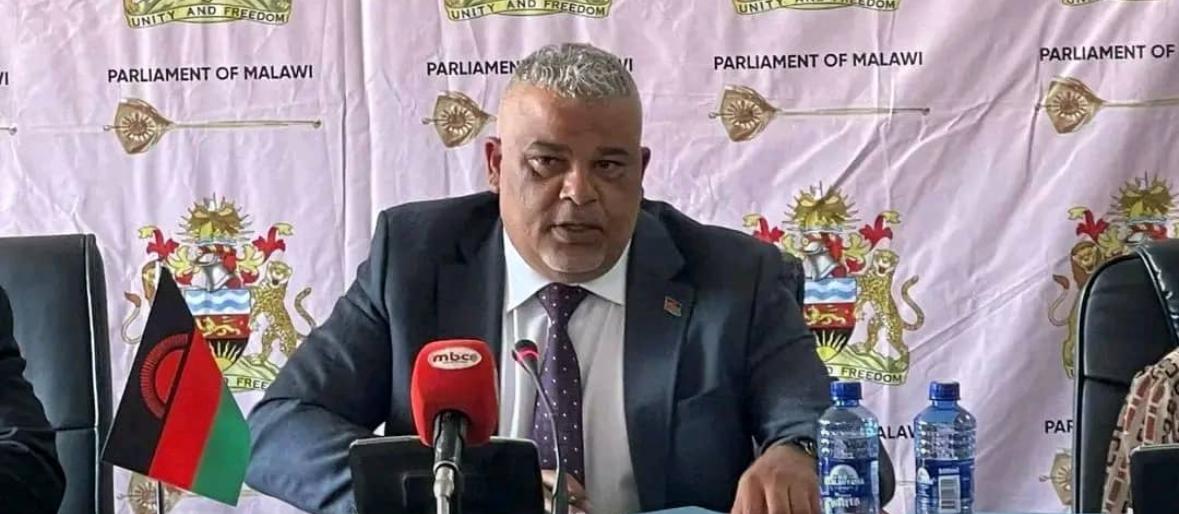
The MCP dismissed the findings, accusing IPOR of bias. Party spokesperson Richard Chimwendo Banda alleged the poll was funded to favor the DPP. In contrast, DPP spokesperson Shadric Namalomba welcomed the poll, saying it reflected the public’s lived experiences under the rule of both parties.
Public reaction has been divided. Tiyambe Zeleza, a scholar who is based in the United States, called the poll “a hotchpotch of uninspired gibberish masquerading as an opinion poll,” criticizing its methodology and transparency. “At best, this is sloppy work. At worst, it’s a propaganda tool,” he wrote on Facebook, pointing to an unusually wide gap between the leading candidates as inconsistent with Malawi’s historical voting patterns.
Zeleza questioned the sampling strategy, though he conceded the sample size might be statistically sound if simple random sampling was used, something he doubted.
Political observer Sylvester Ayuba offered a more pragmatic view, noting that denial won’t help. “I refuse to react to [the results] with denial. I would rather accept and use [the information] to make right decisions. People’s opinions can change [quickly]. Targeted campaigns can pull surprises.”
One likely voter, who is based in South Africa and asked to remain anonymous, said the 12 percent undecided and the 6 percent who declined to reveal their choice represent “voters up for grabs” for all parties. He added that the DPP needs just 8 more percentage points to cross the 50+1 threshold required for an outright win.
MCP insists it is undeterred. The party will win, said Banda.