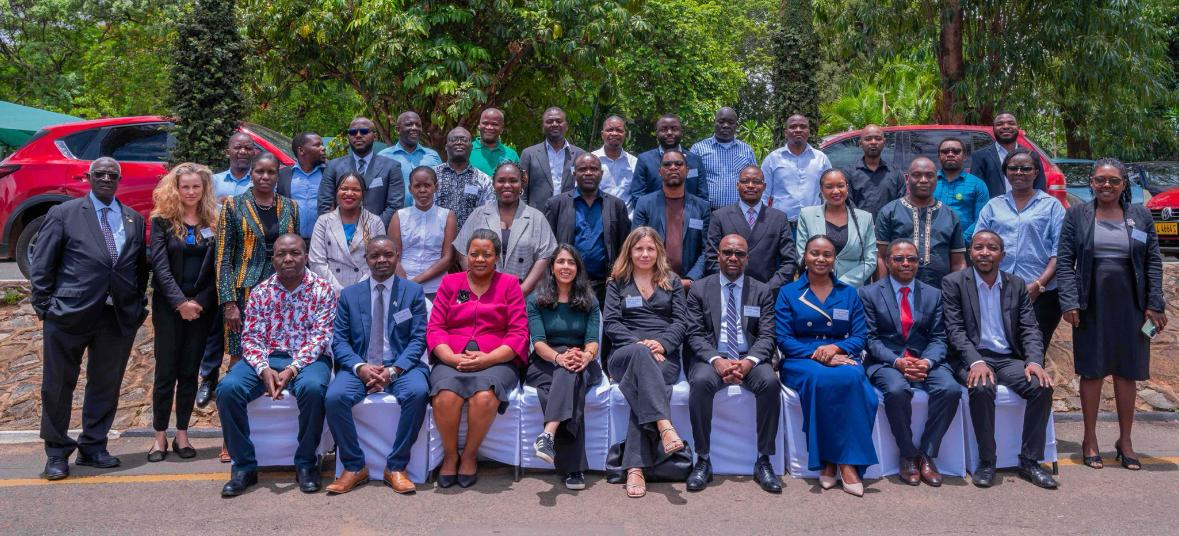

An Inspector General’s audit found fraudulent payments, weak supplier controls and poor record-keeping in World Vision Malawi’s management of a US$33-million malaria grant.
a US$33-million malaria grant.
NEWS | Malawi | Global Health | By Watipaso Mzungu
An audit by the Global Fund Office of the Inspector General (OIG) has found World Vision Malawi (WVM) responsible for US$125,901 in non-compliant expenditure, including payments linked to fraudulent invoices, duplicate transactions and inadequate supporting records.
The findings raise concerns about the controls WVM had in place while serving as a principal recipient of Global Fund money.
The OIG’s 5 June 2025 report examined WVM’s management of a US$33-million malaria grant and concluded that some grant activities had been “compromised by fraudulent practices”, poor oversight and weak record-keeping.
In some cases, the lack of documentation made it impossible for auditors to establish whether key malaria interventions had taken place as reported.
The audit identified four areas in which WVM’s actions or omissions breached the Global Fund’s grant regulations.
Fraudulent payments
The OIG identified fraudulent payments totalling US$69,044. Of this amount, US$46,922 related to vehicle hire for Indoor Residual Spraying (IRS) campaigns.
The audit found that local supplier Planet Car Hire submitted 13 fraudulent invoices covering 41 vehicles that were supposedly used in IRS campaigns.
Four vehicles billed as Land Cruisers or buses were registered as motorcycles and small cars, according to the report.
Three summary invoices worth US$27,284 also carried duplicate reference numbers from previously paid periods and lacked supporting details.
The OIG concluded that the supplier had “knowingly or recklessly misled” WVM to obtain a financial benefit.
A further US$22,122 was linked to internal fraud.
According to the report, WVM finance staff created and processed two fictitious payment requisitions. One resulted in a duplicate US$8,757 payment being sent to a personal bank account instead of the intended supplier.
The second was a duplicate payment of US$13,365 to another supplier, supported by a forged delivery note.
The OIG found that the staff involved had “knowingly or recklessly misled WVM” to benefit third parties. WVM subsequently recovered the funds.
Poor records made spending impossible to verify
The audit identified a further US$56,857 in non-compliant expenditure because of inadequate records and supporting documentation.
The OIG said it could not determine whether 15 vehicle-hire billing documents from 2020 to 2022 complied with Global Fund requirements because of “poor record keeping and lack of supporting documentation”.
The problem went beyond financial compliance.
“The absence of reliable records similarly prevented the OIG from confirming whether IRS activities actually took place as reported,” the audit said.
Weak oversight of suppliers
The OIG also found that WVM lacked consistent controls over vehicle-hire suppliers.
Of the 510 vehicles used between 2020 and 2022, 165 did not appear in inspection reports, according to the audit.
District teams also used different approaches to checking vehicle use and invoices. Some did not carry out reconciliations, while others conducted only sample checks.
The OIG said these inconsistencies created opportunities for fraudulent invoices to go undetected.
The audit further found that WVM’s 2021 and 2022 Framework Agreements did not require suppliers to submit invoices to the organisation’s National Office, limiting central oversight.
Suppliers were not given Global Fund rules
The Global Fund’s regulations require principal recipients to provide suppliers with the Fund’s Code of Conduct for Suppliers.
The OIG found that WVM had failed to do so.
Its 2021 and 2022 Framework Agreements and Local Purchase Orders did not refer to the Global Fund’s supplier code, which the OIG deemed non-compliant.
WVM argued that suppliers were subject to World Vision’s own supplier code. The OIG, however, found that the organisation’s code did not fully align with the Global Fund’s requirements.
The audit concluded that WVM did not have effective oversight mechanisms because its controls failed to identify payments associated with fraudulent practices.
Under the Global Fund’s regulations, principal recipients are required to ensure that grant money is used only for its intended purposes.
The findings are particularly significant given the scale of vehicle-related expenditure. Vehicle hire accounted for US$11.5 million, or 32% of the grant budget for the relevant period, making it one of the programme’s major cost areas.
WVM served as principal recipient for one of Malawi’s two Global Fund malaria grants from 2016 to 2023. The Global Fund says it has invested more than US$2.2-billion in Malawi since 2003.
The OIG audit does not make a determination of criminal liability. Its findings concern administrative and financial controls, including WVM’s responsibility to safeguard grant funds and maintain adequate oversight.
WVM has since taken action, including dismissing staff and strengthening its systems. However, the audit’s findings concern control failures that occurred while the organisation was responsible for administering the grant.
The implications extend beyond the amounts identified by the audit. For an organisation entrusted with managing donor funds, the ability to prevent, detect and account for expenditure is central to maintaining confidence in the grant system.
The audit found shortcomings in vehicle-hire controls, payment verification, documentation and supplier compliance.
WVM continues to serve as principal recipient for one of Malawi’s two Global Fund TB/HIV grants under Grant Cycle 8.
World Vision Malawi Board Chairperson Dr Rose Nyirenda could not be reached for comment.
A senior official at the United States Embassy in Malawi, Uchechi Roxo, declined to comment and referred questions about principal recipients to the Executive Secretariat of Malawi’s Country Coordinating Mechanism (MCC).
“For clarification, the USG and UK represent the Bilateral Constituency, one of many constituencies on Malawi’s Country Coordination Mechanism. This governance structure has the Executive Secretariat who is best placed to answer questions on Principal Recipients. Please feel free to reach out to Mr Cuthbert Nyirenda,” Roxo said.
Nyirenda had not responded to questions by press time.