
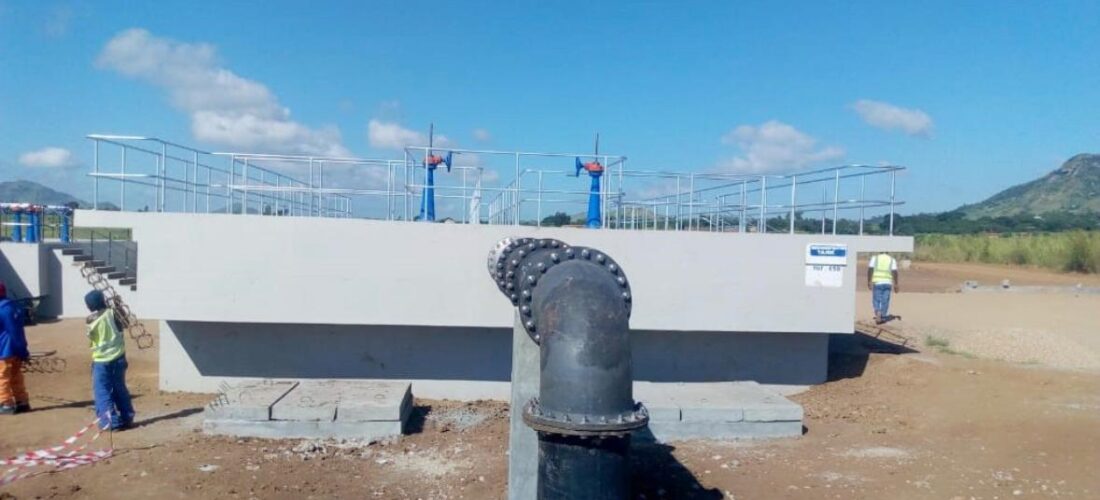
The Public Accounts Committee says funds earmarked for a World Bank-backed dam project were redirected to finance emergency maize imports, delaying efforts to improve water supply in Blantyre and surrounding areas.
By The Forum
When the Malawi government announced plans to import maize worth $77 million to avert a hunger crisis, local farmers protested, arguing that authorities had rejected offers from domestic producers selling the staple at lower prices and instead opted to source maize from neighbouring Zambia.
The imports were delayed after the government struggled to raise the required funds, prompting the reallocation of money from other projects, a practice often employed during emergencies. It has since emerged that part of the financing came from funds belonging to the Blantyre Water Board (BWB).
Parliament’s Public Accounts Committee (PAC) is now demanding that the government refund the $13 million it withdrew from BWB, according to a report published by The Daily Times on Tuesday. The funds were originally provided by the World Bank for the Mudi Dam Project.
“What happened was wrong. This money was meant for the Mudi Dam Project, which would have improved water supply to the people of Blantyre and surrounding areas,” PAC chairperson Steven Baba Malondera was quoted as saying.
“The government should refund the money so that the project can proceed and people can benefit from reliable water services.”
The issue surfaced during PAC’s review of audit findings, where lawmakers sought an update on the World Bank-funded project. The Mudi Dam is considered critical to improving water supply in Blantyre, Malawi’s commercial capital, which continues to grapple with chronic water shortages.
President Peter Mutharika secured re-election in September last year amid a food crisis affecting an estimated four million people. Earlier this year, his administration launched the “Four Fs” strategy — Food, Fuel, Fertiliser and Finance — aimed at stabilising food supplies, boosting agricultural productivity and achieving Zero Hunger by 2030.
“We are moving away from looking at agriculture in isolation and toward a food-systems approach that addresses every link in the chain, from soil health and seed diversity to market efficiency and the nutritional value of food consumed,” said Bennett Nkasala, Principal Secretary (Administration) in the Ministry of Agriculture, during the launch of the 2025 Global Hunger Index by Welthungerhilfe and the Food Systems Assessment Report by Concern Worldwide.
Parliament has since approved a K10.987 trillion ($6.46 billion) national budget for the 2026/27 financial year, with food security among its top priorities. The Ministry of Agriculture received K971.3 billion, including K931.1 billion earmarked for food production, irrigation and strategic grain reserves.
The latest dispute highlights the difficult balancing act facing the government as it attempts to fund both emergency food interventions and long-term infrastructure projects. With the new budget introducing a range of tax measures to boost revenue, attention will now turn to whether the Treasury can quickly raise the resources needed to reimburse BWB and get the Mudi Dam Project back on track.
—
Related: Malawi govt blocks Amaryllis report tabling, demands key witnesses appear before PAC


