
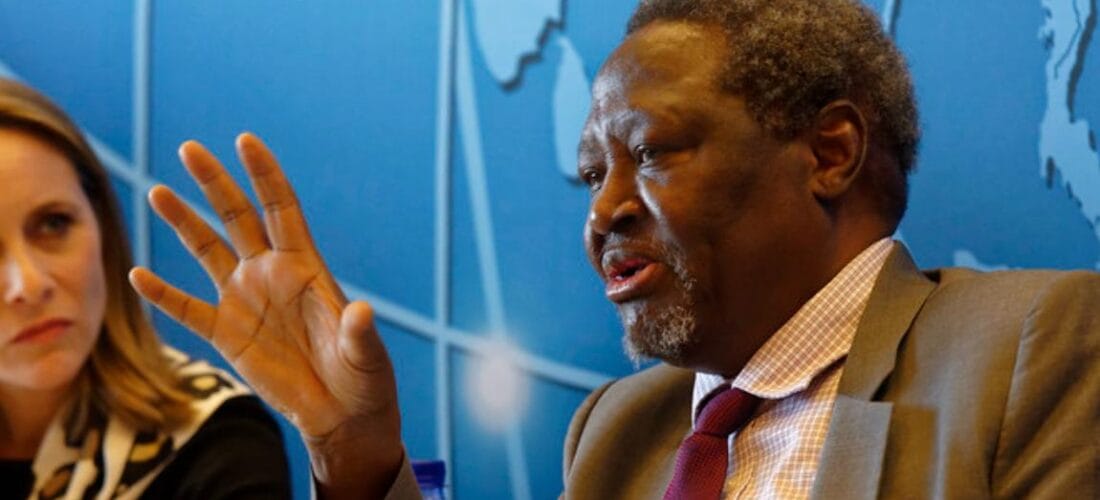
A new society aims to take Mkandawire’s ideas beyond academia, engaging younger scholars and applying his thinking to development challenges in Africa and across the world.
By Patrick Mwanza
There is something quietly defiant about the idea of institutionalising a mind. Not preserving it in reverence, but allowing it to keep moving across generations, disciplines and borders. That is the bet the organizers behind the newly formed Thandika Mkandawire Society (TMS), an initiative that seeks to carry forward the intellectual inheritance of the late Professor Thandika Mkandawire, are willing to make.
In announcing its inaugural symposium, conveners Paul Tiyambe Zeleza of Howard University and Rita Kiki Edozie of the City University of New York described an effort that is both scholarly and practical. The aim is to amplify Mkandawire’s thought while opening new pathways for research and policy rooted in his vision for Africa and beyond. Besides, Mkandawire should not be confined to geography; doing so is to misunderstand him.
There has long been a tendency to describe Mkandawire first as an “African intellectual”. It is meant as praise, but it risks shrinking a thinker whose work ranged across the full terrain of the human condition. Mkandawire did not argue for Africa in isolation. He argued for a more just ordering of societies, informed by history, grounded in evidence and shaped by possibility.
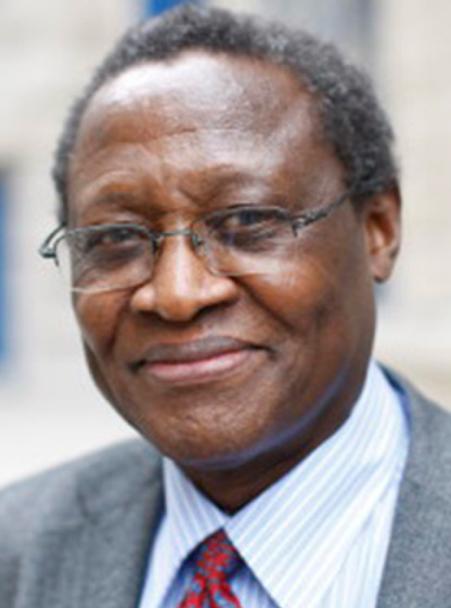
Born in Zimbabwe to a Malawian father, Mkandawire’s intellectual journey was as transnational as his life story. Trained as an economist, his work cut across development theory, economic policy and social transformation. At the time of his death in 2020 in Stockholm, he was Professor of African Development at the London School of Economics. His career also included leadership roles at the United Nations Research Institute for Social Development, the Council for the Development of Social Science Research in Africa and the Swedish Institute for Future Studies.
The list of institutions is impressive, but it is not the point. What matters is what he did within them. He insisted on rigour, resisted intellectual fashions, and returned again and again to the question of how societies organise themselves to deliver dignity.
Recognition is often delayed. Societies are not always generous to their own while they are alive. So there is something fitting in the emergence of initiatives like TMS, spaces that refuse to let important work fade into the background.
The society’s ambitions are modest in form but wide in reach. It will convene regular virtual seminars, bringing scholars together to read and discuss Mkandawire’s work. The intention is not simply to admire, but to engage. Younger scholars, including postgraduate students and early-career researchers, will be introduced to his thinking through those who have studied it closely.
And relevance sits at the centre of it all.
Organisers say the society will explore how Mkandawire’s ideas can inform national development strategies, continental frameworks such as the African Union’s Agenda 2063, and global agendas including the Sustainable Development Goals. This is not nostalgia. It is about application.
For Doyle Kalumbi, a US-based banker and statistician, the stakes are clear. Countries like Malawi lose out when they sideline those who understand both local realities and global systems. Mkandawire, he argues, was one of those rare thinkers who could bridge both worlds without losing depth.
His work on the democratic developmental state, transformative social policy, and the politics of knowledge production offers not just analysis, but tools that remain underused.
Those who encountered him in person often recall something harder to define but easy to recognise. Lupenga Mpande, a Malawian academic at Mkandawire’s alma mater in the United States, once put it simply: when Mkandawire spoke, you paid attention. Not out of obligation, but because the clarity of his thinking demanded it.
That clarity endures in his writing.
Mkandawire may be gone, but the argument he advanced, that ideas matter, that institutions matter, that justice is not accidental, remains unfinished. Perhaps it always will be.
The inaugural TMS symposium, held on April 24 under the theme “Reading Thandika: Institutionalising the Enduring Legacy of Mkandawire’s Thought”, is less a conclusion than a beginning. It is a reminder that intellectual work does not end with a life. It continues, if we choose to carry it forward.
And perhaps that is what immortality looks like: a body of thought that continues to move.
—
Also Read: Sowing seeds in the House: When faith meets Malawi’s politics


