PERSPECTIVE | Patrick Mwanza
Once again, we find ourselves at the eleventh hour. And one has to ask: waiting for what, exactly? A miracle? Perhaps we should ask Jesus, because only divine intervention seems capable of explaining our stubborn habit of refusing to do for ourselves what planning, foresight and simple common sense demand.
We wait, we hope, we pray and then we are shocked when the predictable happens.
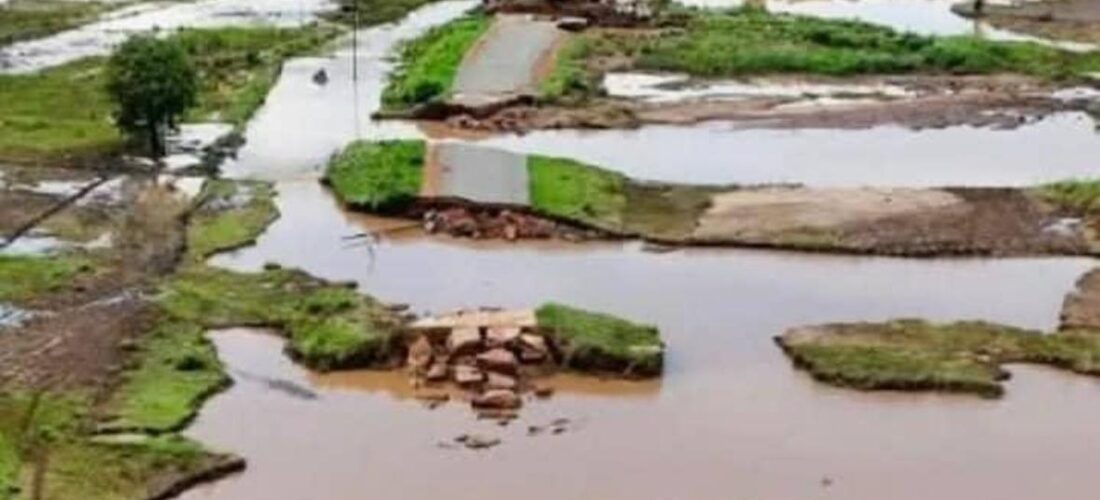
The heavens, to be fair, have opened. But not in the way we imagined. They have opened with force, with consequence. The rains have come, abundantly so, laying bare the cost of our collective inertia. The destruction they have caused invites uncomfortable comparisons with biblical times, with the story of Noah. Faced with looming catastrophe, Noah prepared. He didn’t wait for the waters to rise before acting. He planned, gathered and built. Faith, in that story, wasn’t passive. It was practical.
The Old Testament makes that clear. Noah followed instructions to the letter. Preparation, not panic, saved what could be saved. Faith didn’t excuse him from responsibility; it demanded it.
What makes our present situation harder to defend is that none of this is mysterious. When the waters eventually recede, they do what they have always done. They drain into rivers and streams, collect in Lake Malawi, exit through the Shire River, flow into the Zambezi and, finally, spill into the Indian Ocean. This isn’t conjecture. It’s geography, taught in Standard Eight, reinforced in junior secondary, completed in senior secondary and revisited in college, albeit with more sophisticated language.
The basics, however, remain unchanged. We know what happens when rain falls on Malawi. We know where the water goes. We know which areas flood and which communities bear the brunt. Ignorance isn’t our problem. Habit is.
Whether it’s drought or too much rain, Malawi never seems prepared for either. The extremes differ, but the outcome is depressingly familiar: hunger. One begins to wonder what exactly is wrong with us. How does a country so accustomed to disaster continue to behave as though each one is a surprise?
Our colleges continue to turn out graduates trained in fields the country desperately needs. And yet, these same graduates drift through the streets unemployed, their skills slowly eroding from lack of use. In response, we are offered a fashionable refrain: they should become entrepreneurs. Work for themselves. A fine idea, but only on paper as paper doesn’t lend money. Banks do. And they are conspicuously absent when young people without collateral come knocking.
This persistent hopelessness has consequences. It is the kind of environment that sometimes pushes otherwise law-abiding citizens to contemplate taking matters into their own hands, convinced that someone, anyone, must stop the runaway train hurtling toward national ruin. But is that the Malawi we want? Is that the destination we are prepared to accept?
“We have arrived at a strange paradox: a country where you are free to speak, free to criticise, yet often confronted with leadership that appears unmoved by either.”
It raises old, uncomfortable questions. Why do leaders forget what they ran on the moment they take office? Why do promises evaporate so quickly? Who, in the end, are they really serving? And perhaps the hardest question of all: how do we change our course — our curse — of history?
Our history, after all, isn’t especially long. From independence in 1964 to 1994, Malawi endured a one-party state that denied basic freedoms, including the right to choose leaders freely. Thirty years. The next three decades were meant to be different, a period in which democracy would mature, accountability would deepen, and citizens’ voices would matter.
Instead, we have arrived at a strange paradox: a country where you are free to speak, free to criticise, yet often confronted with leadership that appears unmoved by either.
It’s against this backdrop that Mutharika 2.0 presents itself. There are signs, at least rhetorically, that he has heard the public’s frustration. He speaks of a different kind of politics. Of doing better. One hopes he isn’t naïve enough to believe that intention alone produces results.
Leadership isn’t about wishing things into place. It’s about choices. He now has an opportunity to prove his mettle. Cabinet reshuffles, when they come, should signal genuine change, not merely the rearranging of familiar faces with little appetite for a different outcome. If results are the standard, then they must be enforced.
If he succeeds, Malawians will benefit first. His government, his party and his legacy will follow. If he fails, history offers a recent reminder. President Lazarus Chakwera entered office with goodwill on his side but still managed to squander it.
Nothing in Malawian politics is guaranteed. Power is temporary. Opportunity fleeting.
In the end, our tragedy isn’t the rain. Rain is natural, often a blessing. Our tragedy is our tendency to react instead of prepare, to pray for miracles while ignoring lessons we have long known. If Noah had waited for the first drops before building the ark, there would be no story, only loss.
The floods we see today aren’t merely acts of nature. They are verdicts on neglect. And until preparation becomes habit, accountability becomes real, and leadership becomes service, we will continue to relive the same disasters, and that is season after season, asking why help never comes, when in truth, it already has.
—
Also Read: Anticipatory action and disaster management in Malawi
Related: A nation that can’t protect its people can’t prosper
Related: Malawi 2025: Mutharika vows to cancel dubious deals; NEEF closed