OPINION | GUEST ESSAY | Bertrand Banda
Let’s be honest, UTM didn’t do well in the September 16 elections. Finishing third with just 4 percent isn’t something anyone can spin as a win. The Malawi Congress Party came second with 33 percent, and the Democratic Progressive Party took it all with 56.7 percent. That kind of margin doesn’t leave much room for debate.
President Lazarus Chakwera was smart enough to concede. He said even if all the irregularities were fixed, they wouldn’t have changed the result. I respect that as it was a level-headed decision when the country clearly needs calm and focus more than another drawn-out fight.
Now, about Newton Kambala. His resignation from UTM’s Presidential Advisory Council might look straightforward, but it says more about the party than it does about him.
The council itself was created last December by UTM president Dalitso Kabambe. It had four members — Kambala as chair, former secretary general Patricia Kaliati, former publicity secretary Joseph Chidanti Malunga, and former women’s director Annie Makuta. They were all heavyweights once, but each had lost out at the party’s elective convention.
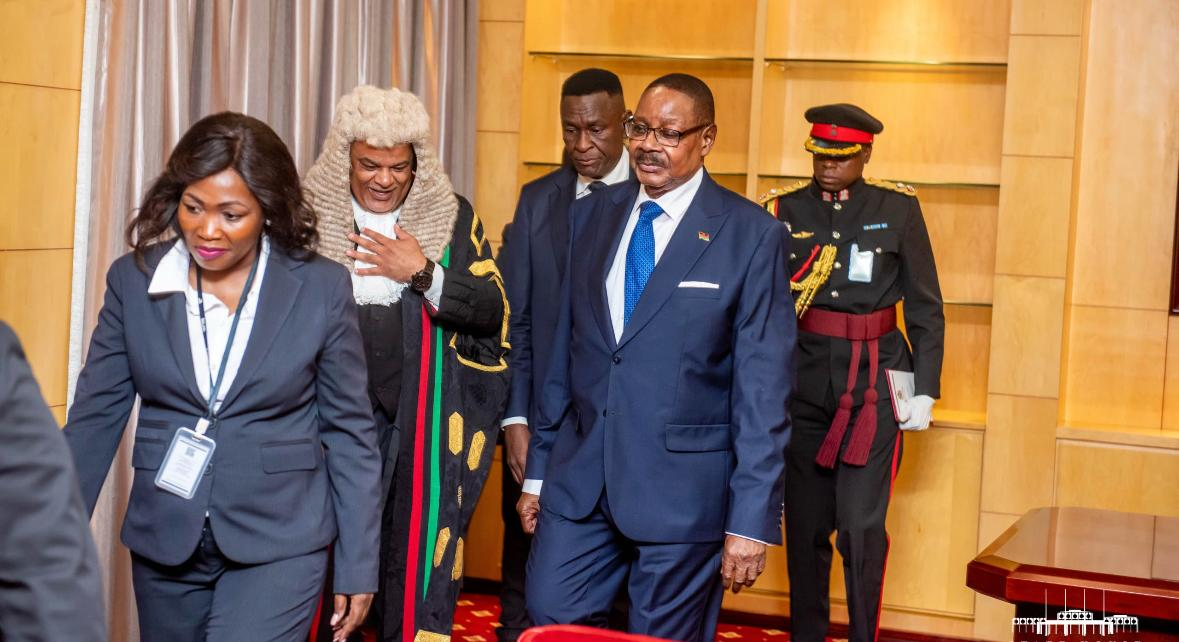
Soon after Kambala quit, UTM announced the council was being dissolved to “improve efficiency and strengthen the structure.” That’s the official line. At President Peter Mutharika’s swearing-in, Makuta showed up wearing DPP colors. That raised more questions than the party probably wanted to answer.
In his resignation letter, Kambala said the council wasn’t effective in advising Kabambe before the elections. He had told his party leader, plainly, that UTM didn’t have money or grassroots structures to compete. His advice was to form an alliance with the DPP. Kabambe said no. The rest is history.
I get why someone might feel frustrated after giving their best advice and watching it ignored. But here’s what I struggle with: why go on national TV to talk about it? When he appeared on Times Exclusive, Kambala shared too much. There’s always a time to speak and a time to hold back, especially when the wounds are still fresh.
You see, being an advisor doesn’t mean your ideas must be taken. Advice is just that — advice. The person you advise can choose to follow it or not. That’s how leadership works.
So, I can’t help wondering if Kambala ever really believed in Kabambe. Kabambe joined UTM not long ago, after Chilima’s death, and quickly rose to the top. For those who were there from the beginning — like Kambala and Kaliati — that must have been hard to watch. Maybe this resignation isn’t just about a failed strategy. Maybe it’s about feeling left out of your own house.
To me, this whole episode feels like a reflection of a deeper problem inside UTM. It’s not just one man stepping down, it’s a sign that the party still hasn’t figured out what it wants to be without Chilima.
If Kambala’s right, and the advisory council was useless, then that’s on the leadership that created it. If he’s wrong, then maybe he expected too much. Either way, UTM is left looking divided and uncertain and that’s never a good look for a party that wants to be taken seriously.
That’s what I think, dear reader. Kambala’s resignation might be polite and neatly worded, but beneath it is a louder message: UTM needs to find itself again before it loses everyone who once believed in it.