By The UDF Campaign
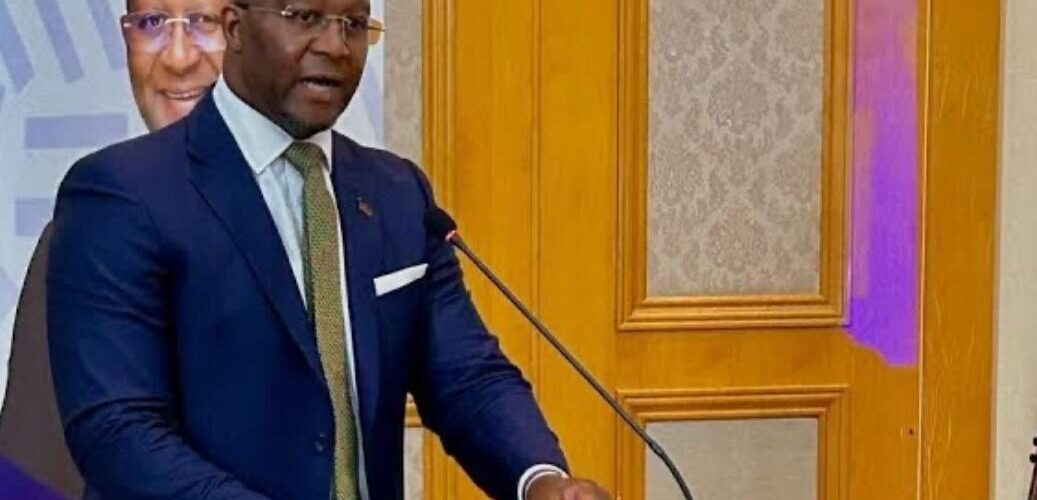
United Democratic Front (UDF) leader Hon. Atupele Muluzi has delivered a blunt and sobering message to Malawians: the age of aid is over—and unless the country radically transforms how it views economics, leadership, and its own potential, it will collapse under the weight of its own failures.
Speaking at the Platform for African Democrats (PAD) summit in Lilongwe on Wednesday, Muluzi declared that “Malawi must stop thinking help is coming—because it’s not.”
“Trump is drifting the world into a ‘help-yourself’ route,” he said. “If we don’t adjust fast, we’ll crash. The days of donor dependency are over.”
And the numbers back him up—with a vengeance.
An Economy in Freefall
Malawi’s real GDP growth slowed to just 1.8% in 2024, battered by droughts that hit agriculture hard. The World Bank now forecasts a miserable 1% growth rate for 2025, far below the previously hoped-for 4.8%. Against a population growth rate of 2.6%, this amounts to a contraction in per capita GDP—a nation growing poorer, faster.
The current account deficit soared to 18.7% of GDP in 2024, and following massive cutbacks in U.S. aid, Malawi faces a crippling $2 billion forex gap, with only $1 billion in annual forex earnings. The crisis is visible on the ground—long fuel queues, empty shelves, and a black-market dollar rate now at K4,400, more than double the officially pegged K1,734.
“None of this is accidental,” Muluzi said. “It’s the cost of living in denial—waiting for donors while we ignore our own power to generate wealth.”
A Broken System
But this is not just a momentary slump—it’s a national affliction decades in the making. Malawi’s per capita income sits at just $550, less than a third of the sub-Saharan average, and even lower than war-recovering Mozambique. At independence in 1964, Malawi was ranked among the four poorest countries on Earth. Today, it ranks 184th out of 188 countries, with only war-torn nations like CAR, Burundi, Yemen, South Sudan, and Afghanistan below it.
“It’s a country in perpetual crisis, one made and exploited by its own elites,” a furious Muluzi told the gathering. “And the only way out is through politics—through electing leaders with the courage to destroy this system and build a new one.”
Business First, Survival Next
Muluzi used the moment to unveil his “Business First” strategy—a no-nonsense plan that prioritises manufacturing, turns subsistence agriculture into a commercial powerhouse, and rewires education to serve real economic needs.
“Malawi doesn’t need miracles. We need leadership that’s ruthlessly focused on removing obstacles to jobs and growth. Enough talking. It’s time to build.”
The stakes could not be higher. Nearly 70% of Malawians live in poverty, and food insecurity has become the norm. Debt is exploding, with public debt projected to hit 86% of GDP in 2024. And with over three million Malawians already gone to South Africa in search of better lives, the message is clear: people are voting with their feet.
Urbanisation has jumped from under 5% at independence to 20% today, and is projected to reach one-third of Malawi’s 40 million population by 2050. The rural economy is crumbling—and without jobs and investment, so will the rest.
A Choice to Live or Die
Muluzi’s tone wasn’t polished—it was prophetic.
“This election is not about party colours,” he said. “It’s about survival. We either position ourselves as a generator of wealth—or we perish. It’s that simple.”
For a nation teetering on the edge, his words are not just a warning. They are a mirror.
Malawi must now answer: Will it remain a beggar in a world that no longer gives, or will it finally rise and build with its own hands?
“We either wake up,” Muluzi said, “or we die asleep.”