
EDITORIAL | By The Forum
We are in uncharted territory. Nobody who has been here before can claim expertise on how to navigate these waters.
Before the Malawi national football team plays its next game, The Forum, which by design does not cover sport except where it intersects with governance, will stay in that lane as it makes its case. We are patriotic enough to weigh in on a development that has implications for Malawi as a country struggling to break free from the suffocating yoke of underdevelopment.
If you have not seen the commentary about Malawi on social media, including from fellow Africans, you have another think coming. It is time to wake up.
You will notice that when referring to the team, we did not identify it as a women’s team. That was deliberate. It is a challenge to those who still hold stereotypes about what men can do and what women cannot.
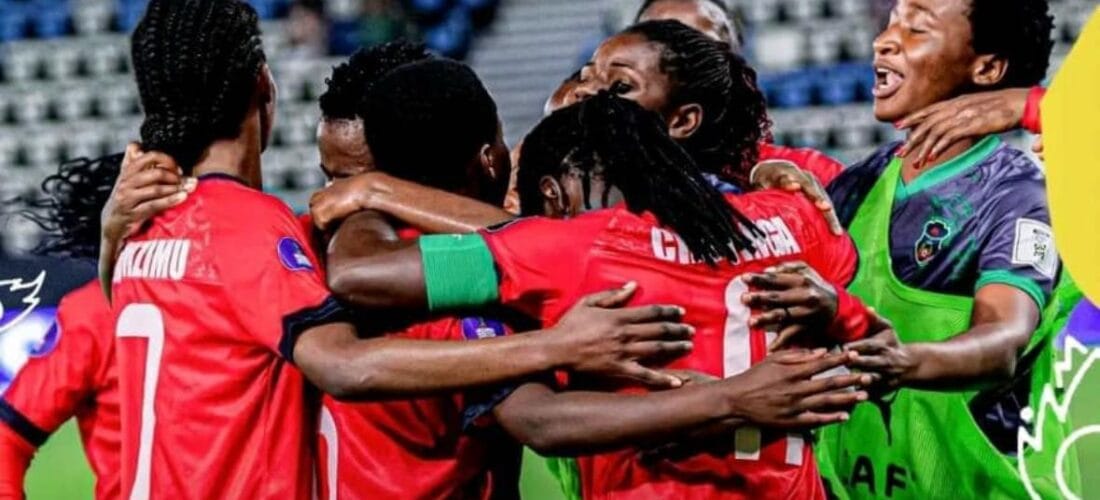
This is the first time a Malawian football team has reached the semi-finals of a continental championship. The women’s team is decades – established in early 2000s – younger than the men’s side, The Flames, which has perennially proven to be a money pit.
And everyone — this is not hyperbole — is talking about the Malawi national team.
It is only a matter of time before the country’s top leadership gets on board to shore up real support for “our girls”, as men have suddenly awakened to what is happening and joined the chorus.
The women’s team had never qualified for the Women’s Africa Cup of Nations (Wafcon). Ranked 153rd in the world when it arrived in Morocco for the tournament, the Scorchers shocked the football-mad continent and beyond by defeating defending champions Nigeria 3-2 before beating Egypt 3-1.
They lost their final group game to Zambia, but it mattered little. They had scored enough goals and conceded few enough in the matches that mattered most to progress to the quarter-finals.
As is often the case, Ghana supporters trash-talked their way into the quarter-final against Malawi, drawing confidence from a friendly match in which Ghana had thrashed Malawi 4-0.
But the match that mattered was a different story.
The Scorchers came from behind to beat the Black Queens 2-1.
Credit to the Scorchers: they have not taken any opponent lightly. While some opponents have relied on chest-thumping and past successes to intimidate them, Malawi’s women have allowed their performances to do the talking.
Yes, we must take each game one at a time before thinking too far ahead. But that logic cannot mean failing to prepare for what comes next.
We are talking about qualifying for the biggest stage in world football, with the World Cup to be played in Brazil next year. We have just witnessed the men’s FIFA World Cup in 2026. Preparations for the women’s tournament do not start tomorrow. They start now — the very second, minute, hour and day we qualified.
We are not saying abandon The Flames, Malawi’s men’s team. We are saying show genuine love to the Scorchers — not just morally, but financially.
The government allocates money for sports development, and Malawi’s football administration is part of that system. If success does not come cheap, then neither should support be rationed according to old habits and old hierarchies.
If The Flames are the favourite child, perhaps it is time to give some attention to the neglected child that never demands it, but lets its results do the lobbying.
The Scorchers have earned this.
They deserve all the support they can get.
And we will not call on the First Lady — because critics would be quick to suggest that her support is driven by the fact that she is a woman. We are calling on the man who occupies the most powerful office in the land to do what is necessary to give the Scorchers every chance of succeeding.
Eleven women at a time, kicking a piece of leather around a football field, have brought attention to a tiny, landlocked economy struggling to convince investors that there is something good within its borders.
That is not just sport.
It is soft power. It is national pride. It is an opportunity to show the world that Malawi can produce excellence.
Opportunity comes but once.
This time, Malawi must be ready.
—
Also Read: Malawi axes Independence Day celebrations as Mutharika cites austerity
Related: Esau ‘Black Mamba’ Kanyenda remembered in parliament after cancer battle

