
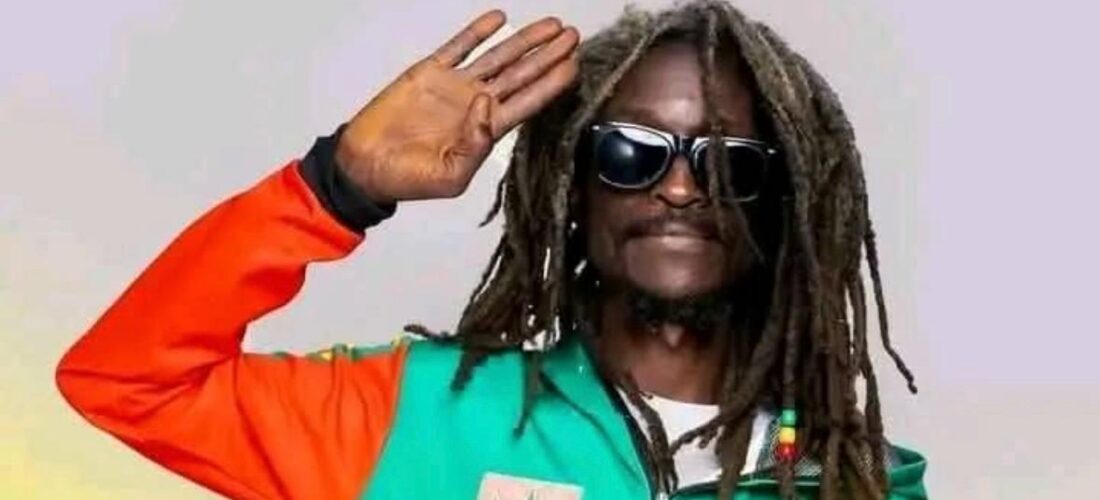
The arrest of Ras Chikomeni over cannabis possession raises a wider question about religious freedom, colonial-era laws and whether Malawi’s justice system can accommodate sincerely held Rastafarian beliefs.
OPINION | Religious Freedom | By Nkhondo Lungu
The recent arrest of Ras Chikomeni on allegations of possessing cannabis with intent to traffic and distribute is a reminder that Malawi continues to enforce laws that are increasingly difficult to reconcile with the freedoms of a modern, open society.
Many of these laws have their roots in the British colonial era, when legislation was used not only to govern but also to control the indigenous population. Colonial rule was built on ethnocentrism, exploitation, domination and, in many cases, the suppression of local customs and practices.
That history should not be simply forgotten. Colonialism did nott just redraw borders and establish administrative structures; it also imposed legal and social systems that often treated African practices as inferior or unacceptable. Independence should therefore have meant more than replacing colonial administrators with Malawians. It should also have meant questioning laws and institutions that no longer serve the interests of the people.
Cannabis is a case in point.
Globally, attitudes towards cannabis have changed considerably. Research and lived experience have driven a growing recognition of its potential medical, industrial and other uses. An increasing number of countries have legalised or decriminalised cannabis in various forms, while governments, corporations and individuals have developed industries around its cultivation and processing.
Cannabis is now used in products ranging from medicines and food ingredients to cosmetics and personal-care products. Whatever one’s position on recreational use, it is increasingly difficult to sustain the argument that cannabis must automatically be treated as a criminal substance in every circumstance.
But the case of Ras Chikomeni raises an even more fundamental question: what happens when cannabis is not being used recreationally, but as part of a person’s religious practice?
“For a Rastafarian such as Chikomeni, the herb is not simply a recreational substance. It is part of a religious practice.”
Malawi has a significant Rastafarian community. Rastafarianism is a faith in which cannabis, commonly referred to as the herb, holds spiritual significance for many adherents. For a Rastafarian such as Chikomeni, the herb is not simply a recreational substance. It is part of a religious practice, a distinction that the law and society should be capable of recognising.
For many Rastafarians, cannabis is used to deepen spiritual awareness, facilitate meditation and strengthen their connection with God, whom they refer to as Jah. Its use is understood as sacred rather than recreational and is connected, in their interpretation, to biblical teachings.
Rastafarians also gather for what are known as “reasoning” sessions, where they chant, pray and discuss spiritual, political and social issues. These gatherings are intended to encourage reflection, unity and peaceful coexistence.
For some practitioners, the herb may be burned as an offering or incorporated into food. Its use therefore extends beyond simply smoking cannabis. It forms part of a bigger spiritual practice.
Rastafarians who defend the religious use of cannabis often point to biblical references to plants and herbs. Among the passages cited are Psalm 104:14, which speaks of God providing “herb for the service of man”; Genesis 3:18, which refers to eating “the herb of the field”; and Revelation 22:2, which speaks of the leaves of the tree being “for the healing of the nations”.
One need not share this interpretation of scripture to recognise that it is sincerely held by those who do.
That is where Malawi’s obligation to protect religious freedom becomes important.
It is difficult to justify arresting and incarcerating someone for possessing cannabis when the possession is genuinely connected to the practice of a recognised religion, particularly when the person is not accused of harming anyone. Religious freedom should not exist only when a faith’s practices are convenient or familiar to the majority.
If Malawi considers itself a democratic and rights-respecting society, it must be prepared to accommodate religious practices that may be unfamiliar, controversial or unpopular, provided they do not infringe on the rights and safety of others.
This does not mean that every claim of religious use should automatically provide immunity from the law. The state can establish reasonable safeguards against abuse, diversion and trafficking. But there is a profound difference between protecting society from criminal trafficking and criminalising a person whose possession is genuinely tied to the observance of his faith.
“Independence should give us the confidence to examine inherited laws critically rather than preserving them simply because they have been on the books for generations.”
That distinction deserves serious consideration in Chikomeni’s case.
It is also time to reconsider the larger assumptions behind Malawi’s cannabis laws. The social stigma surrounding cannabis has shifted considerably in many parts of the world. The conversation is no longer simply about whether cannabis users are criminals or social outcasts. It is increasingly about regulation, public health, personal liberty, economic opportunity and responsible use.
Malawi should not be afraid of that conversation. And we should not forget the colonial history behind many of the laws we inherited.
The point is not that everything introduced by colonial rule was bad, just as everything that existed before colonialism was necessarily good. The point is that independence should give us the confidence to examine inherited laws critically rather than preserving them simply because they have been on the books for generations.
If a law no longer serves its intended purpose, causes disproportionate harm or conflicts with constitutional freedoms, Parliament should have the courage to change it.
The Ras Chikomeni case therefore presents Malawi with an opportunity to look beyond one arrest and ask a much bigger question: are our laws keeping pace with the society we have become?
A person should not have to abandon his faith to remain on the right side of the law.
If Chikomeni’s possession of cannabis is genuinely an expression of his Rastafarian faith rather than an attempt to traffic or distribute a controlled substance, then religious freedom must mean something more than words on paper. It must set him free.
—
The image above is of Chikomeni, a Rastafari from Malawi, proudly representing a tradition and identity that has for years been a part of Malawi’s cultural landscape.
Also Read: Green gold, missed opportunity: What Malawi must learn from global cannabis giants
Related: Tobacco surplus raises pricing fears as Mbilizi warns buyers

