
By Edwin Mauluka
Civil society organisations in Malawi have raised fresh concerns over the 2026 Constituency Development Fund (CDF) Guidelines, arguing that the framework falls short on stakeholder ownership, legitimacy and long-term sustainability.
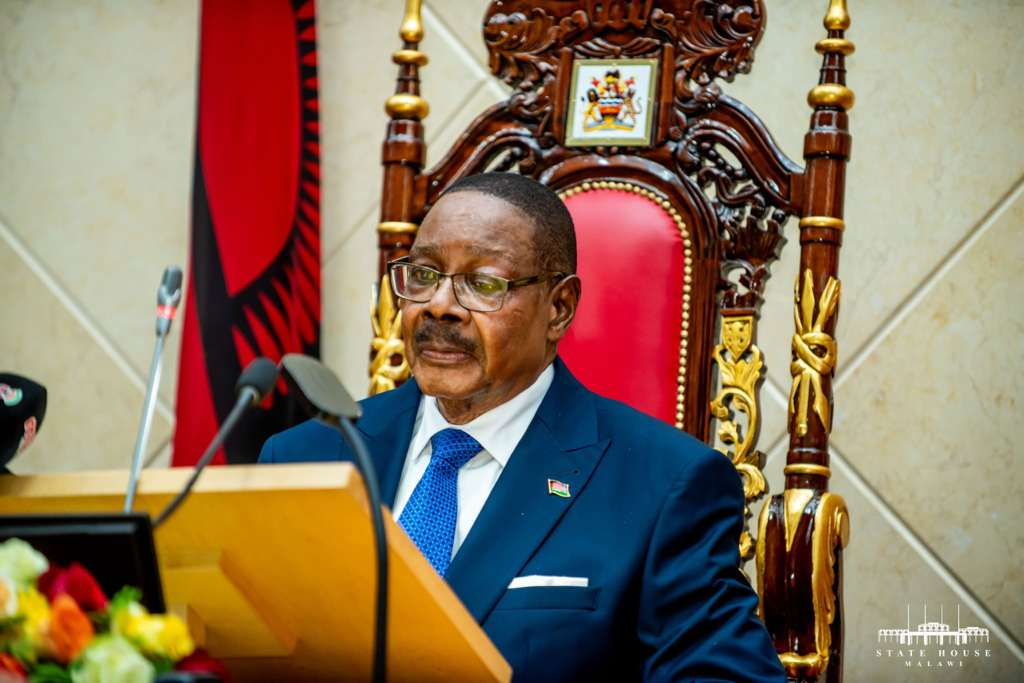
In a statement, a coalition of 12 non-governmental organisations said the new guidelines do not reflect the broad-based, transparent and inclusive consultative process that had been expected, particularly after President Peter Mutharika withheld assent to the Constitution (Amendment) Bill, 2025, partly to allow for wider engagement.
According to the coalition, the latest guidelines appear to sidestep that directive.
At the heart of their concerns is the continued involvement of Members of Parliament (MPs) in roles that go beyond oversight. While Local Authorities are formally designated as custodians of CDF resources, the guidelines still assign MPs responsibilities in project identification, prioritisation, supervision and monitoring.
“This continued involvement risks blurring the constitutional boundary between legislative oversight and executive implementation,” the coalition said. “It does not sufficiently address concerns regarding the separation of powers.”
The statement, signed by Joint Coalition chairperson Benedicto Kondowe, notes that although earlier reform efforts included stakeholder consultations, it remains unclear whether the final document adequately incorporates the views of key players such as Local Authorities, civil society groups and communities.
That gap, the coalition argues, raises fundamental questions about the legitimacy, ownership and durability of the framework.
Another sticking point is the introduction of mandatory contributions toward district-wide projects. While the idea itself may be defensible, the coalition warns that the lack of a clear and publicly disclosed allocation formula could create problems.
“In the absence of transparent benefit-sharing mechanisms, this arrangement risks undermining constituency-level autonomy and may create perceptions of resource diversion from local priorities,” the statement said.
There are also concerns about administrative costs. The coalition cautions that without strict controls, transparency and independent audits, project management expenses could eat into funds meant for actual development.
“If left unchecked, such provisions may inadvertently reduce the proportion of resources reaching tangible outputs,” the group warned.
The proposed performance-based disbursement model has similarly come under scrutiny. While intended to incentivise efficiency, civil society actors fear it could disadvantage already under-resourced Local Authorities, further entrenching inequalities across constituencies.
In response, the coalition has outlined a series of recommendations. Chief among them is a call for the government to publicly clarify how the guidelines align with constitutional principles, especially on separation of powers and decentralisation, which were central to earlier objections.
They also want a structured, post-issuance consultative process to refine the guidelines through meaningful participation from Local Authorities, Parliament, civil society and community stakeholders.
On the role of MPs, the coalition is unequivocal: their involvement should be clearly defined and limited to representation, facilitation and lawful oversight—without extending into executive or administrative functions tied to public funds.
The group further proposes strengthening the framework governing district-wide projects through transparent allocation criteria, equitable benefit-sharing and full public disclosure.
Given that approximately MWK3.6 billion per constituency is earmarked for community development, the coalition stresses the need to safeguard these funds from diversion or administrative erosion. They are calling for mandatory disclosure, independent audits and stronger community monitoring systems to ensure that spending translates into visible, high-impact outcomes.
Other recommendations include placing strict ceilings on project management costs, enforcing detailed reporting requirements and introducing independent audits to protect development resources. The coalition also urges the government to build equity safeguards into the performance-based funding model, alongside capacity support for weaker councils.
Transparency, they argue, must extend to all empowerment and bursary components, with merit-based selection criteria, public disclosure of beneficiaries and accessible grievance mechanisms.
Beyond immediate fixes, the coalition is pushing for a comprehensive legal framework to anchor the CDF within Malawi’s constitutional and public finance systems. Such a framework, they say, would provide long-term certainty while strengthening accountability.
“We remain committed to engaging constructively with government and all stakeholders to ensure that the CDF delivers meaningful development outcomes,” the statement reads. “Ultimately, success must be measured not only by the scale of resources disbursed, but by the integrity of governance and the tangible impact on people’s lives.”
Despite their criticisms, the coalition acknowledges that the new guidelines represent a step forward in restoring structure and accountability to the management of the fund.
They note that the allocation model — reserving 72% for community development projects, alongside targeted funding for district-wide initiatives, economic empowerment and bursaries — signals a deliberate effort to broaden impact and promote inclusion.
“In practical terms, this reflects a strong prioritisation of service delivery,” the coalition said.
Originally introduced in the 2006/2007 financial year, the CDF was designed to empower local communities to identify and implement development projects. For the 2026/2027 financial year, the government has significantly increased the allocation from MWK200 million to MWK5 billion per constituency.
However, the fund’s governance has long been contentious. In May 2025, a High Court ruling declared previous CDF guidelines unconstitutional, finding that MPs’ dual roles in both legislative and executive functions violated the principle of separation of powers.
The new guidelines attempt to address that ruling, but as civil society groups now argue, key concerns may still be unresolved.
And as the debate continues, one thing is clear: the credibility of the CDF will depend not just on how much money is allocated, but on whether the system managing it can stand up to scrutiny.
—
Also Read: Malawi civil society demands action on Zuneth Sattar
Related: New CDF guidelines allow disaster response expenditure