
By Patrick Mwanza
Much has been heard about what it will take for one to emerge a winner of the presidency after votes are cast on September 16, 2025. New rule: no majority, no win.
Dr. Boniface Dulani, a political scientist who teaches political science and conducts research in governance and elections, broke down the implications of the court-ordered “50%+1” rule in a recent appearance on Zodiak TV’s “Zodiak Exclusive.”
He explained that political parties are placing great importance on their choice of presidential running mates to help maximize votes for their ticket. This strategy holds even in the event of a runoff election, where the same presidential and vice-presidential candidates must remain.
“Parties would run with the same candidates,” Dulani noted. Therefore, securing the vice presidency is viewed as a strategic opportunity to influence future government decisions, including cabinet appointments and policy direction.
However, experience has shown that being vice president doesn’t always translate into real power. Since 2004, the role has often come with tensions. President Bakili Muluzi’s choice to overlook his vice president, Justin Malewezi, and instead endorse Bingu wa Mutharika for the presidency marked the start of a strained Bingu-Chilumpha relationship. Bingu later accused Cassim Chilumpha – he stayed true to his roots and maintained a relationship with Muluzi – of undermining his government.
In 2012, Joyce Banda, who had broken away from the DPP to form the People’s Party, ascended to the presidency after Bingu’s sudden death. The DPP was pushed into opposition, illustrating the political risks tied to vice-presidential relationships.
Most recently, the alliance between President Lazarus Chakwera and Vice President Saulos Chilima broke down after Chilima was accused of corruption. The vice president also insisted he was due to be the 2025 presidential candidate, as agreed in the MCP-UTM alliance prior to the 2020 court-ordered rerun.
But Chilima’s tragic death in a plane crash in June 2024 all but ended the relationship. The UTM leadership and supporters were dissatisfied with how the accident investigation was handled.
Michael Usi, who was Chilima’s deputy in UTM, is now also vying for the presidency, challenging his boss Chakwera under his newly formed Odya Zake Alibe Mlandu party, which was previously a movement.
Dulani, during the interview, referenced the August 2024 Afrobarometer poll, which showed the DPP in the lead, followed by the governing Malawi Congress Party, with UTM trailing in third. Yet no party surpassed the 50% threshold, which explains the current rush to form coalitions ahead of the tripartite elections where Malawians will vote for a president, parliamentarians, and local councillors.
Although a poll is a snapshot in time, it doesn’t necessarily predict future events. Public opinion, shaped by unfolding events, can shift over time. Dulani pointed out that there will be no further Afrobarometer poll before the September 16 vote.
At the time of this writing, DPP has entered into an agreement with the Northern Alliance Block (NAB), a coalition of parties led by politicians from the northern region.
In a joint statement seen by The Forum, DPP and NAB said: “This alliance is born out of a shared commitment to rescue Malawi from deepening social-economic crisis. Leadership failure, and rising despair that have defined the current administration.
“The agreement represents not just political alignment, but a unified national mission…it is a coalition of purpose,” they said in a statement signed by George Chaponda, DPP’s Chairperson of Alliance and Negotiating Committee and Buchizga Madhlopa, NAB’s Lead Negotiator on Alliances.
Here is more context on why parties are chasing alliances. In past elections since 1994, parties didn’t have to win more than 50 percent of the vote — a simple majority of votes cast was enough. Parties could then cobble together a working majority after the election. Coalitions were often formed before elections to prevent the party that won under 50 percent from forming government by inviting other parties to join after the vote.
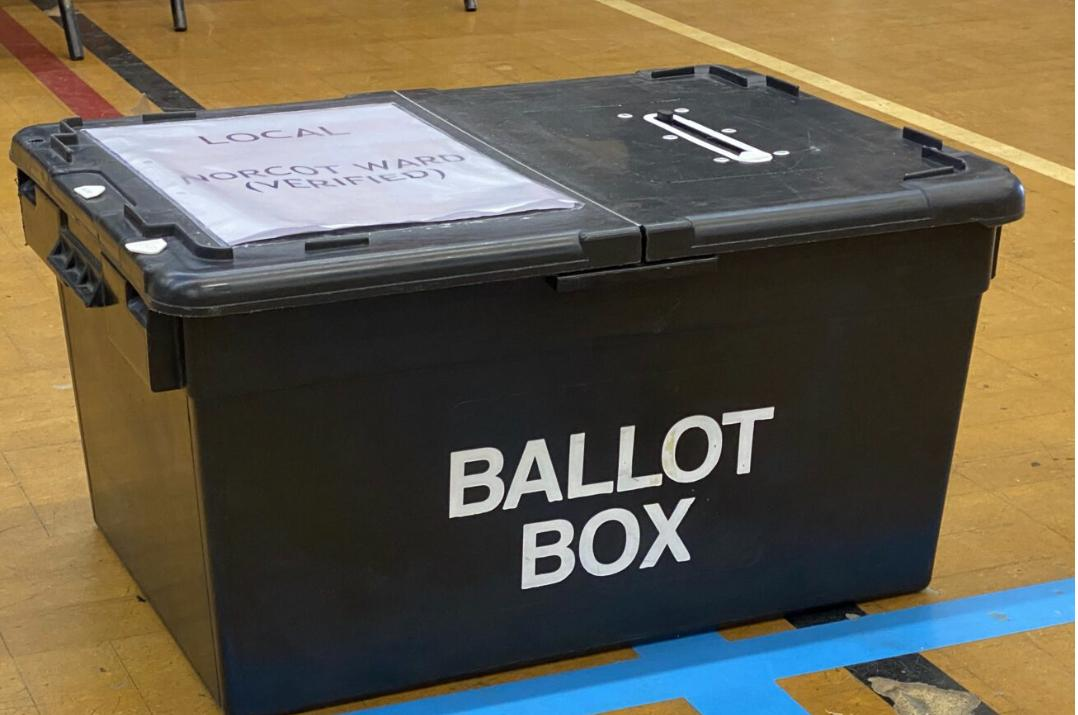
Following the 2019 elections, opposition parties alleged irregularities, including the use of correction fluid on ballot papers. The court sided with the plaintiffs and ordered the 50 percent plus one vote rule for future elections. This is where Malawi is at now.
The DPP holds sway in the populous South, the MCP in the Centre, while the less populous North, once dominated by the Alliance for Democracy after the 1994 multi-party elections, has often served as a political kingmaker.