By Patrick Mwanza
The relentless drumbeat of pro-government messaging on Malawi Broadcasting Corporation (MBC) ahead of the September 16 elections has drawn criticism, the latest coming from the country’s media watchdogs.
In a joint statement, the Malawi Chapter of the Media Institute of Southern Africa (MISA Malawi) and the Media Council of Malawi (MCM) said they met with MBC executives to urge the public broadcaster to “play a critical and constructive role in the current election cycle.”
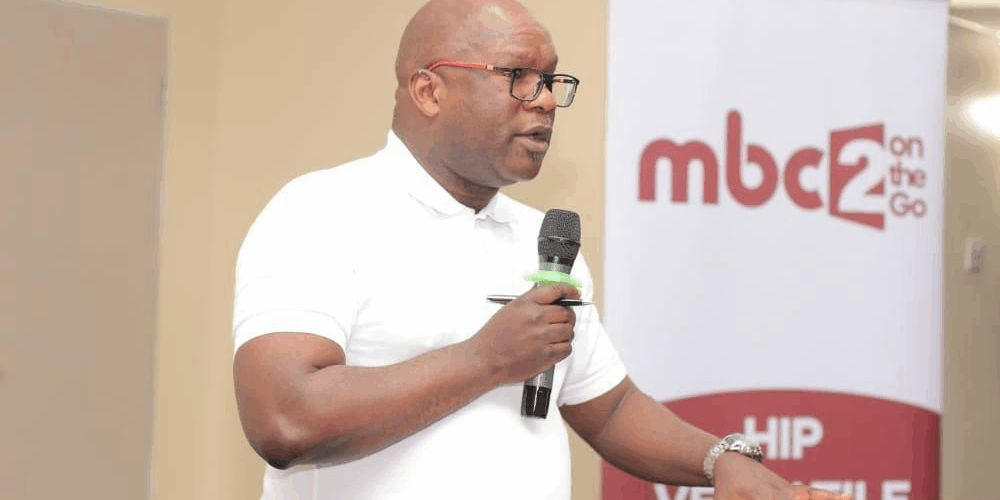
At the center of the controversy is MBC Director General George Kasakula, increasingly seen as a ruling Malawi Congress Party (MCP) loyalist. Once vowing to “sanitize” MBC upon assuming office, Kasakula now frequently uses the platform to issue overtly political statements.
In a recent broadcast that went viral, Kasakula accused the main opposition Democratic Progressive Party (DPP) of orchestrating fuel and sugar shortages to undermine the government, a claim he offered without evidence.
DPP Vice President for Central Region, Alfred Gangata, responded to the attacks, reminding Kasakula of his public service obligations.
“Attacking Prof. Peter Mutharika’s personality will not serve you well,” wrote Gangata. “Your days are numbered.”
Observers view the smear campaign against the DPP’s presidential candidate and former president Mutharika as a strategy to derail his election prospects.
In their statement, MISA and MCM “strongly recommended that the public broadcaster reconsider the involvement of its Director General in commentary and opinion-based programming” to safeguard MBC’s neutrality, especially during elections.
MBC, for its part, pledged to ensure fair coverage and said it would open its airwaves to “all political parties to articulate their various political agendas.”
The Forum hasn’t independently verified that commitment. And whether MBC is serious about change remains an open question.
“MBC requires a different media campaign to be freed,” said veteran journalist Lowani Mtonga. “It’s always been used as a propaganda tool for the party in power.”
Another media analyst, speaking on condition of anonymity, said bold leadership is needed inside MBC.
“Someone has to take a stand,” the analyst said. “That would send a powerful message that MBC can serve all Malawians. We know how politicians behave during elections.”
Mirian Chiponde, a keen follower of Malawian politics, welcomed the meeting between MBC and the watchdogs as a positive step.
“We have to start from somewhere,” she said. “At least the two sides are talking.”
Still, dialogue and promises aside, Mtonga says what’s most troubling is that “journalists have reduced themselves to party cadres.”
Kasakula, in his early days as DG, promised sweeping reform: “My first job at MBC is to sanitise the system and put in place boisterous measures that will turn the broadcaster into a reputable and professional entity,” he said. “I owe my allegiance to the people of Malawi, the owners of MBC.”
But for now, critics say it’s politicians who hold sway.
Don Napuwa, a seasoned journalist, believes stronger action is needed.
“I think the best MISA can do is sue the government and challenge MBC’s conduct in the Constitutional Court,” he said.
Another veteran, Phinleys Pinifolo, agrees after some self-reflection.
“As citizens, we’ve failed to hold [politicians] accountable. Our leaders’ failure to reform MBC stems from our lack of vigilance,” he said. “The remedy lies in our collective vigilance. By taking MBC to court, we can demand accountability, ultimately reclaiming our public broadcaster.”
—
MISA defends and promotes media freedom, freedom of expression and access to information in Malawi. MCM promotes self-regulation and professionalism within the media industry in Malawi.