
By Edwin Mauluka
The main opposition Malawi Congress Party (MCP) has proposed legislation to cap the fiscal deficit at 3 percent of gross domestic product (GDP), arguing that runaway government spending is driving the country’s rising debt burden.
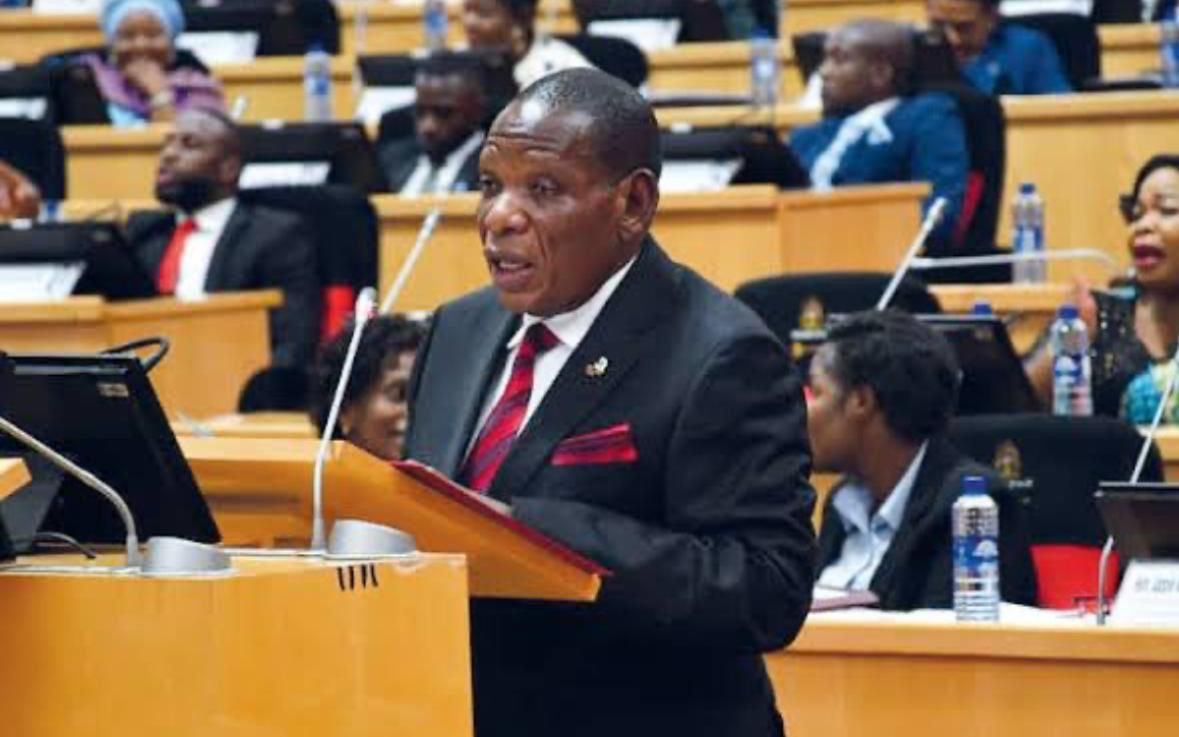
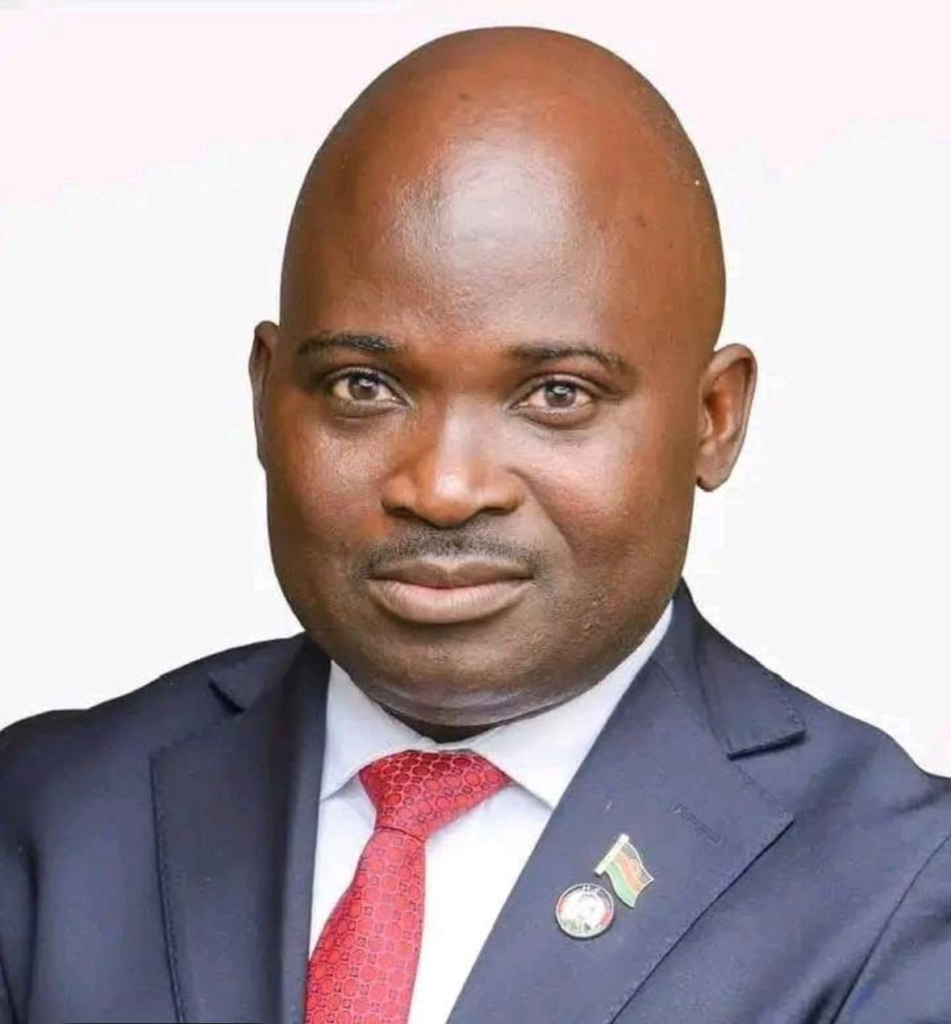
Presenting the party’s response to the 2026–2027 National Budget, delivered on February 27, MCP spokesperson on finance Peter Dimba said Malawi’s debt levels are now unsustainable and require firm legal limits on borrowing.
“Fiscal deficits remain the root of our perennial economic malaise,” Dimba said. “We must learn to live within our means.”
He warned that continued expansionary spending — often driven by politically motivated subsidies — has worsened the situation and entrenched structural economic challenges.
Malawi’s projected fiscal deficit stands at MWK2.8 trillion, equivalent to about 9 percent of GDP. Dimba noted that with limited access to concessional external financing, the bulk of this deficit will be financed domestically, pushing up interest rates and inflation.
Interest payments alone are projected at MWK2.7 trillion, nearly matching the size of the deficit.
“As Parliament continues to approve deficit budgets, it is effectively authorising more borrowing,” he said. “That is what drives up interest rates and inflation. We need to legislate on this.”
As of December 2025, Malawi’s public debt stood at MWK23.9 trillion, about 90.9 percent of GDP. Of this, 65 percent is domestic debt, a structure economists warn poses heightened risks to macroeconomic stability.
In his budget statement, Finance Minister Joseph Mwanamvekha pledged to reduce the fiscal deficit from 11.9 percent to 9 percent of GDP through revenue enhancement and expenditure controls. However, Dimba argued that fiscal consolidation alone will not guarantee success.
He said the budget’s effectiveness hinges on broader economic reforms, including closing the external financing gap, stabilising the exchange rate, rebuilding foreign exchange reserves, controlling money supply growth, and sustainably reducing inflation.
“Stability cannot be achieved without addressing structural imbalances in fiscal operations, monetary expansion and the external sector,” he said.
Dimba also called for reforms to the Farm Input Subsidy Programme (FISP), describing it as a persistent drain on public finances that has failed to resolve chronic food insecurity.
“One of the challenges we face as a country is that we know what needs to be done, but we are not politically bold enough to do it,” he said.
While commending ongoing efforts on debt restructuring and fiscal consolidation, Dimba said more must be done to accelerate economic growth beyond 6 percent and restore macroeconomic stability.
He urged the government to strengthen export diversification and improve trade facilitation through a more robust regulatory framework. He also highlighted mining as a key sector that could reduce reliance on imports and ease pressure on foreign exchange reserves.
On infrastructure, Dimba stressed the need for targeted investments to drive long-term growth. He cited the World Bank-funded Mpatamanga Hydropower Project and the rehabilitation of Mkula and Kapichira power stations as priorities in the energy sector.
In transport, he proposed construction of a modern, expanded Kamuzu International Airport to position Malawi as a regional aviation hub.
“Our strategic partner in Malawian Airlines, Ethiopian Airlines, has serious intentions to develop this into a regional and intercontinental hub,” he said. “The multiplier effect of such an investment could be massive.”
Dimba further called for improved revenue mobilisation through increased efficiency and a broader tax base, particularly by bringing more participants from the informal sector into the tax net. However, he cautioned against overburdening formal sector taxpayers.
He also urged stronger action against corruption, describing it as a major obstacle to socioeconomic progress.
On tax measures in the proposed budget, Dimba warned that raising value-added tax (VAT) from 16.5 to 17.5 percent, alongside new transaction levies and higher user fees, risks stifling private sector recovery.
“Households are already under pressure from high food prices, borrowing costs and declining real incomes,” he said.
He strongly opposed the proposed levy on money transfers, arguing that it is retrogressive and counterproductive.
“These funds have already been taxed in many cases, whether as salaries, business income, or remittances,” he said. “Such measures will discourage financial inclusion and may even push people out of the banking system.”
Dimba also criticised the introduction of excise taxes on items such as perfumes, jewellery and cosmetics, arguing that they disproportionately affect women.
“These taxes are tantamount to economic discrimination and should be reviewed,” he said.
He further questioned the introduction of excise duty on hybrid vehicles — 10 percent for engines between 1501cc and 2500cc, and 20 percent for larger engines — warning that the policy undermines efforts to reduce fuel imports.
“We should be incentivising cleaner and more efficient vehicles, not penalising them,” he said, noting that fuel imports already consume a significant share of Malawi’s limited foreign exchange.
On employment, Dimba criticised the government’s recruitment freeze, saying it will worsen already high unemployment, particularly among young graduates.
He contrasted the freeze with large allocations to the Constituency Development Fund (CDF), arguing that reallocating a fraction of those resources could support meaningful job creation.
According to Dimba, recruiting 10,000 young people at an average monthly salary of MWK500,000 would cost about MWK60 billion annually—far less than current CDF allocations.
“This raises serious questions about the government’s priorities, especially regarding youth welfare,” he said.
He added that limited job opportunities undermine the value of education, particularly in the context of newly introduced free secondary education.
Citing recent National Statistical Office data, Dimba said Malawi’s unemployment rate stands at about 20 percent—one of the highest in the region.
“We cannot afford policies that further worsen the situation,” he said.
—
Also Read: Malawi Parliament okays $60.7m for Northern Region roads, water systems
Related: IMF, Malawi to meet November 5 as debt soars to K21.6 trillion
Related: Malawi unveils K10.9 trillion 2026/27 budget, deficit narrows as govt targets economic recovery