
Six senior members of Malawi’s Country Coordinating Mechanism have formally objected to a move to seek input from members who were absent when the body voted on the selection of the Principal Recipient for millions of dollars in Global Fund funding.
NEWS | Governance | Global Fund | By The Forum Reporter
A governance dispute is brewing inside Malawi’s Country Coordinating Mechanism (CCM) after six senior members formally objected to what they describe as an attempt to “manufacture participation” and overturn a decision already taken on the selection of the Principal Recipient (PR).
The dispute follows the CCM’s decisional meeting held on Tuesday, 18 August 2026, at the Ministry of Finance. Quorum was confirmed, and members deliberated and voted on all items on the agenda, including Item 8, which concerned endorsement of the Civil Society Organisation (CSO) PR Selection Committee report and confirmation of the PR to manage millions of dollars in Global Fund resources for HIV, tuberculosis and malaria programmes.
But a day after the meeting, the CCM Secretariat informed members that colleagues who had been absent would be contacted by email and asked to provide “input, comments or endorsement” on Item 8.
The stated reason was that the meeting documents had been circulated in advance.
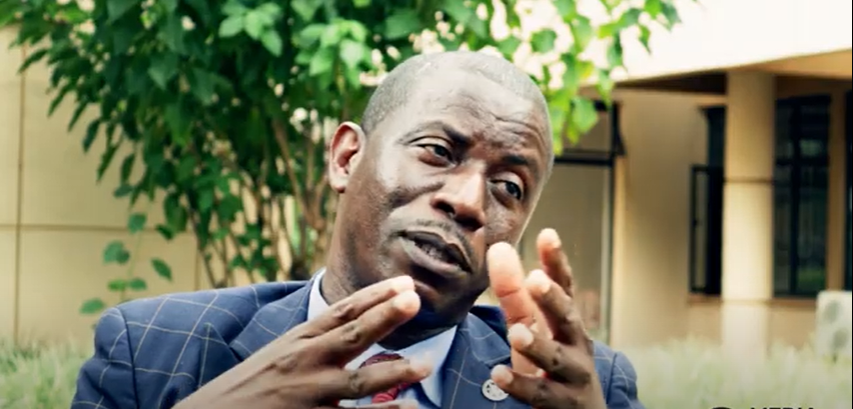
The move has prompted a formal letter of objection signed by Dunker Kamba, Bishop Moffat Litchapa, Treza Mphwatiwa, Memory Kamwendo, Tionge Gondwe and Ishmael Phiri.
“A decision taken by a duly constituted and quorate meeting is, upon the taking of the vote, final and complete.”
The six argue that the move is not about inclusion but amounts to an attempt to undermine a decision made by a duly constituted and quorate meeting.
Their first concern is that seeking input from members who were absent undermines the meaning of attendance and quorum. They argue that treating the receipt of documents as equivalent to participation “renders the concept of quorum and attendance meaningless”.
A meeting, they say, is constituted by the physical or virtual presence of members, their participation in debate and their exercise of a vote informed by that debate. Allowing absent members to influence an outcome after the meeting, they argue, would make attendance at CCM meetings “optional and without material effect”.
The six also object to what they describe as “retroactive participation”.
Members who were absent, they say, “were not privy to the debate”, and therefore had no opportunity to ask questions, hear responses or be persuaded or dissuaded during the deliberations.
Inviting them to weigh in after the vote, they argue, amounts to “an attempt to manufacture participation retrospectively in a process that has already been concluded”.
The group further warns that reopening the decision undermines the principle of finality and creates room for manipulation.
“A decision taken by a duly constituted and quorate meeting is, upon the taking of the vote, final and complete,” they argue.
If post-meeting responses are allowed to influence the outcome, they say, two scenarios could follow: the original decision could be overturned, or it could simply be “rubber-stamped” to create the appearance of broader support.
Either outcome, they argue, would compromise the “finality, transparency and defensibility” of the PR selection.
The six also warn of reputational and donor risks.
With the Global Fund expected to rely on the CCM’s decision-making processes, they argue that the legitimacy of the PR selection is now “in serious and lasting doubt”. They say the dispute could expose the CCM to internal legal challenges as well as “reputational and governance risk vis-à-vis the Global Fund and other stakeholders who rely upon the CCM to conduct its affairs with procedural regularity and consistency”.
The sharpest grievance, however, concerns what the members describe as selective application of the process.
Items 6 and 7 — relating to endorsement of funding priorities and programme allocation — were accepted as final immediately after the meeting. Only Item 8, concerning the PR selection, is now being revisited.
The six describe this as “inherently unfair to the members who did attend, deliberate and vote in good faith” and a case of “unequal treatment of similarly placed resolutions”.
They also question the distinction between seeking “input” and seeking a fresh decision.
Even if the Secretariat’s request is framed as soliciting comments rather than votes, the six argue that the distinction is meaningless if those comments are ultimately intended to influence the outcome.
“A decision taken by a duly constituted and quorate meeting is, upon the taking of the vote, final and complete.”
“If such comments were intended to carry no weight whatsoever, there would be no proper purpose in soliciting them,” they argue. “If they are intended to carry weight, then we are… in the territory of an improper post-hoc variation of a concluded decision.”
The six have made two demands of the CCM chairperson.
First, they want him to halt any post-meeting solicitation concerning the PR selection. Second, if the process has already begun, they want it stopped and any responses already received excluded from the official record.
They insist that the resolution passed on 18 August by members who were present should be treated “on the same footing as every other resolution passed at that meeting — as final and binding”.
The letter states that the members “reserve all our rights” and warns that further action could follow, including taking the matter to the Global Fund Secretariat if the dispute is not resolved.
“We take this opportunity to reiterate our continued commitment to the work of the CCM and to the highest standards of good governance in its proceedings,” they conclude.
The CCM chairperson had not responded in writing by the time of publication.
The dispute comes at a sensitive moment, with the PR set to oversee substantial Global Fund financing for Malawi’s HIV, TB and malaria response.
At stake is not only who will administer the funds, but whether the CCM can demonstrate that its own decision-making rules are applied consistently and that decisions reached through a quorate process can withstand scrutiny.
For now, the selection of Malawi’s next Principal Recipient remains in limbo — not because a vote was not taken, but because there is now a dispute over whether that vote should be allowed to stand.