
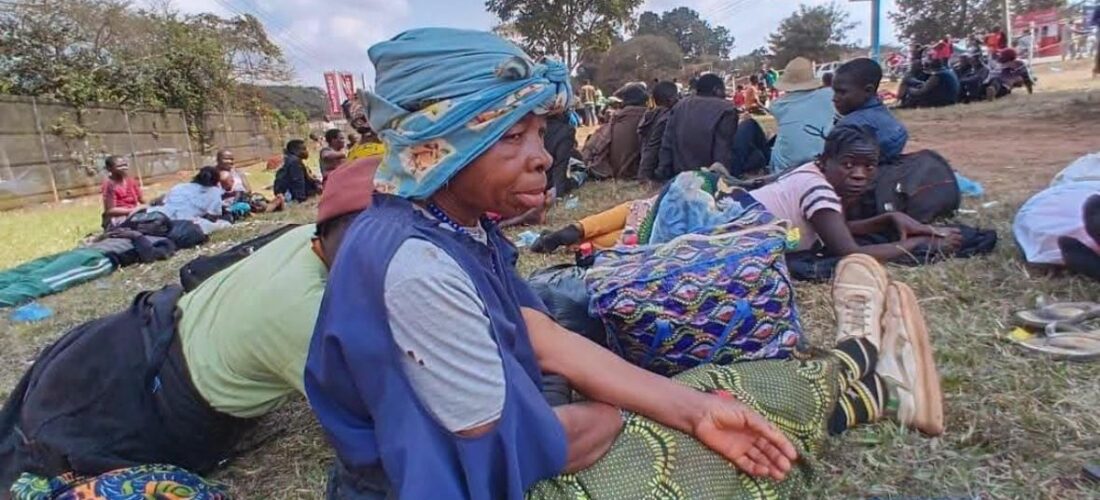
The displacement of Kasasile villagers has evolved beyond a land dispute, exposing weaknesses in public leadership, disaster response, and respect for the rule of law while leaving hundreds of families in prolonged hardship.
ANALYSIS | Governance | Anthony Simwaka
The ongoing displacement of Kasasile villagers in Nkhata Bay District has drawn national attention, exposing deep challenges in governance, accountability, and adherence to the rule of law.
The community, removed from land belonging to the Malawi Defence Force (MDF), continues to face severe hardship, including inadequate shelter, limited access to basic services, and pressure on already strained health facilities.
Reports from the area describe widespread suffering among displaced families. Local well-wishers — they include Bishop Mtumbuka, Bon Kalindo and other civic actors — have mobilized donations and support, particularly during the previous MCP administration. While their efforts have provided temporary relief, the broader crisis remains unresolved.
Background to the dispute
The Kasasile community had occupied MDF land for years despite repeated government directives ordering residents to vacate.
The land, designated for military use, is not legally available for civilian settlement. Although details surrounding compensation or relocation arrangements remain unclear, the government’s position has consistently been that the villagers were occupying restricted public land.
The dispute reflects a broader national challenge: illegal encroachment onto government land, often fuelled by weak enforcement, misinformation and expectations that unauthorized occupation will eventually be legitimized.
Similar cases have emerged across Malawi, particularly where public land remains idle or poorly monitored.
Rule of law and public accountability
The Kasasile case has reignited debate over Malawi’s commitment to the rule of law.
Public criticism often focuses on officials who abuse their positions or act with impunity. However, the crisis also raises difficult questions about citizens who knowingly disregard legal boundaries.
This erosion of accountability — among both public officials and communities — has contributed to corruption, land disputes and governance failures. Kasasile demonstrates how these tensions can escalate into a humanitarian crisis when legal processes are ignored or poorly managed.
Government response under scrutiny
Critics argue that government institutions failed to manage the eviction and subsequent resettlement effectively.
Key concerns include:
- Nkhata Bay District Council, which is responsible for disaster management, failed to respond adequately once the humanitarian situation became apparent.
- Area Member of Parliament Mackenzie Chipalamoto was criticised for acting only after the crisis had escalated, despite representing the affected community.
When displaced villagers began a three-day protest march to Lilongwe to seek government intervention, Chipalamoto, together with MP Catherine Gotani, eventually persuaded them to abandon the journey.
While the intervention prevented the march from continuing, observers have questioned why decisive leadership came only after the situation had reached a breaking point.
The protest march: A sign of desperation
The villagers’ decision to walk to Lilongwe attracted national attention but also highlighted the risks faced by vulnerable families.
The march exposed women and children to dangerous conditions; bypassed local channels such as the District Commissioner’s office and the constituency office; and illustrated the depth of public frustration and the perceived failure of local leadership.
Although the protest succeeded in drawing media attention, it also underscored the institutional weaknesses that forced citizens to resort to such extreme measures.
A call for reflection and reform
The Kasasile displacement is about far more than a land dispute. It exposes broader governance failures that require action from both citizens and the state.
Going forward:
- Citizens must respect the law and refrain from occupying government land illegally.
- Public officials must respond promptly, transparently and responsibly when communities are displaced.
- Government institutions should strengthen resettlement planning, disaster response and communication with affected communities.
- Communities should not expect compensation for occupying land they have no legal right to use.
The Kasasile crisis is a reminder that sustainable development depends on shared accountability. Respect for the rule of law — by both government and citizens — remains essential to preventing similar tragedies and strengthening Malawi’s democratic institutions.
—
Also Read: Malawi’s migration dilemma: Why economic despair is driving citizens to South Africa