
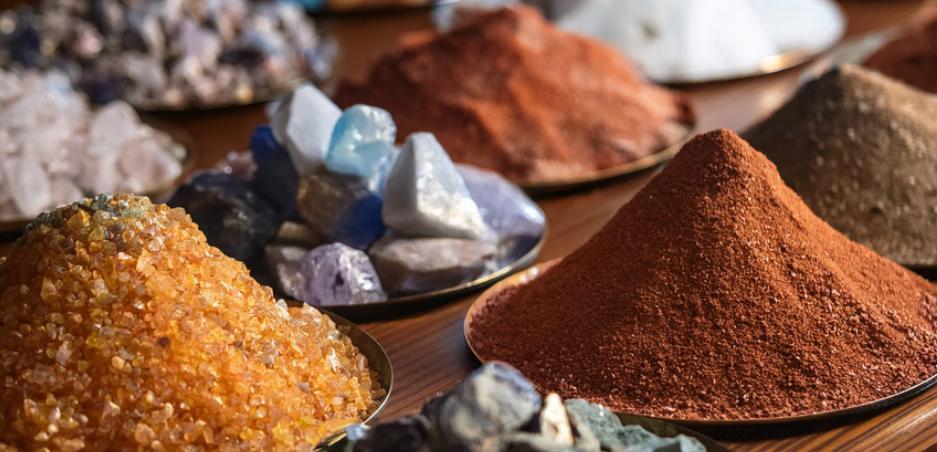
The ceremonial blast launches mining at one of the world’s largest high-grade rare earth deposits, with Lindian promising jobs, community investment and first production by late 2026 as Malawi seeks to grow mining’s contribution to the economy.
NEWS| Mining | Edwin Mauluka
Lindian Resources has officially launched mining operations at its Kangankunde Rare Earth Project in Balaka District after conducting the mine’s first ceremonial blast on Wednesday.
The Kangankunde deposit, Lindian’s flagship asset, is regarded as one of the world’s most significant rare earth resources because of its low uranium and thorium content, making it attractive for downstream processing. Through its wholly owned subsidiary, Rift Valley Resource Developments Limited (RVR), the project hosts an estimated 261 million tonnes grading 2.14% total rare earth oxide (TREO), placing it among the world’s largest and highest-grade rare earth deposits.
Lindian executive director Zekai Komur described the blast as a milestone for the company, Malawi and communities surrounding the mine.
“It is a major milestone for Kangankunde, the government of Malawi, the people of Malawi and the local community. In just over a year, we have demonstrated what we can deliver at Kangankunde, and we’ve done it safely while following all the required approval processes,” Komur said.
He said the company was committed to ensuring nearby communities benefited from the project through corporate social investment.
“We listened carefully to the community and understood that education was their top priority. We have already built a primary school that can accommodate 400 learners and are committed to building a secondary school once production begins. We also previously constructed a police station for the community,” he said.
Komur added that Lindian would continue prioritising employee welfare while maintaining close engagement with local communities.
The project’s official launch was marked by Director of Administration in the Ministry of Labour George Masinga, who remotely triggered the blast.
Masinga urged mining companies to comply with occupational safety and labour laws.
“As the Ministry of Labour, we are working closely with the company to ensure safety standards are upheld, workers’ rights are respected and any workplace injuries are properly compensated,” he said.
He described the project as a significant achievement for Malawi, saying it would generate employment and economic opportunities.
“About 3,400 people are employed here, and nearly 80% are from the surrounding communities,” Masinga said.
He nevertheless stressed that the company must honour its social responsibility commitments and maintain strong relationships with host communities.
According to Lindian, the project is fully funded for its first stage of development, with all major approvals secured. Civil works, site establishment and procurement of processing infrastructure are progressing ahead of first production, targeted for the fourth quarter of 2026.
The mine will produce rare earth minerals used in advanced technologies, including electric vehicles, wind turbines, robotics and consumer electronics. The company said Kangankunde’s consistently high neodymium-praseodymium (NdPr) ratio positions it as a strategic supplier of monazite concentrate to global clean energy and technology markets.
Malawi currently hosts two major carbonatite-hosted rare earth projects. Besides Kangankunde, Mkango Resources, through its subsidiary Lancaster Exploration, is developing the Songwe Hill project in Phalombe District. Songwe Hill contains mineral reserves of 18.14 million tonnes grading 1.16% TREO and is expected to produce about 5,954 tonnes of TREO annually during its first five full years of operation.
The Kangankunde mining licence area has meanwhile been expanded from 900 hectares to 2,500 hectares by the Malawi Mining and Minerals Regulatory Authority.
The project comes as Malawi pushes to increase value addition in the mining sector. Executive Order No. 2 of 2025 prohibits the export of unprocessed minerals and requires in-country beneficiation, while the newly established National Mining Corporation will oversee compliance.
Government estimates suggest Kangankunde, together with the Kasiya graphite and rutile project, could generate about US$500 million in annual revenue if fully developed, which is a significant boost for a sector that currently contributes less than 1% of Malawi’s gross domestic product.
Industry publication Rare Earth Mining News says that once Kangankunde begins producing monazite concentrate, Malawi could become Africa’s largest rare earth producer since Burundi’s Gakara mine. Benchmark Mineral Intelligence also projects that Kangankunde and Songwe Hill together could account for roughly 30% of Africa’s rare earth output by the end of the decade once both projects reach full production.
—
Also Read: Malawi illegal mining deaths spark calls for sector reforms
Related: Mining watchdog wants EITI localised to strengthen oversight and compliance
Related: Malawi suspends CMG mining in Karonga over river pollution, safety breaches

