

By Edwin Mauluka
Malawi’s approach to tackling HIV and AIDS is set for a reboot, with stakeholders developing an Integrated HIV Public Engagement Training Module aimed at reshaping how communities engage with prevention, treatment and care.
The proposed guidelines focus on generating demand for HIV services while strengthening prevention, treatment and care programmes. At their core is a shift toward communication strategies that resonate more deeply with communities.

The move follows findings from a study — Awiri Sayenda Asadapangane: Rethinking Public Health Approaches to Community Engagement in the Management of HIV and AIDS in Malawi — conducted in Dedza and Thyolo by Sharifa Abdulla, Ph.D., a Malawian social researcher at the University of Glasgow.
Presented at a multi-stakeholder meeting in May 2025, the research highlighted a persistent disconnect between biomedical approaches and community realities. Participants agreed on the need to strengthen how HIV-related information is communicated within local contexts, particularly in rural areas, and to better align scientific messaging with indigenous knowledge systems.
In response, the National AIDS Commission (NAC), working with the University of Glasgow, Art and Global Health Center Africa (ArtGlo), and the Department of HIV and Viral Hepatitis, convened a workshop to develop a social and behavioural change communication (SBCC) module.
Malawi currently lacks a harmonised framework that integrates biomedical science, local knowledge and lived experience, a gap the new module seeks to fill. The aim is to support more effective health promotion, including encouraging condom use and sustained uptake of HIV treatment.
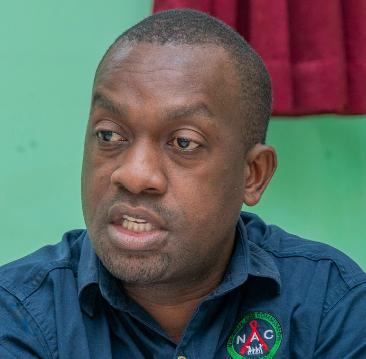
NAC’s HIV Prevention and Management Officer, Francis Mabedi, said existing approaches have often sidelined community input.
“This prompted us to consider developing an inclusive guide, grounded in lived experiences, to support HIV prevention, treatment and care,” Mabedi said. He added that the module could help sustain the country’s gains in the HIV response, but only if implemented consistently.
“This can only happen if health promotion is delivered in a harmonised manner, guided by a shared framework,” he said.

Brown Chiwandira, Programme Manager for HIV Prevention at Partners of Hope, echoed the sentiment, describing the guidelines as a necessary step to reach underserved populations.
“Where the fight against HIV has reached, we need to explore untapped ways of engagement to reach the last mile,” Chiwandira said. “These guidelines can help stakeholders adopt approaches that acknowledge the complex role of indigenous knowledge systems in shaping responses to HIV.”
Civil society organisations, community members and traditional leaders were actively involved in developing the guidelines, a process stakeholders say is critical to their success.
“Listening to communities and ensuring their active involvement in health promotion is key to effective messaging,” Mabedi said. “This is a process, but once complete, it should lead to more inclusive and impactful HIV communication.”
A central feature of the guidelines is the requirement for health workers to engage community leaders and understand local beliefs, practices and knowledge before delivering health messages.
Group Village Headman Miyowe of Senior Chief Chauma in Dedza, who contributed to the process, said the approach could bridge longstanding gaps.
“We want health promotion officers to first understand our practices and beliefs,” he said. “As chiefs, we can help them identify areas where messages might be resisted and how best to communicate them.”
Abdulla’s research underscored the consequences of failing to reconcile biomedical and community perspectives. The disconnect, she found, contributes to low uptake of HIV services, including testing, prevention and treatment.
“A gap between these knowledge systems creates tension in how communities understand and respond to HIV,” she said. “When this gap is not addressed, it leads to suspicion, resistance and missed opportunities.”
She argued that co-creating the module with communities, health professionals and civil society could make HIV messaging more relatable and more effective.
“When communities see their own knowledge reflected, it becomes integrated into their lived experience,” Abdulla said. “That, in turn, can shift how people understand illness and influence their treatment-seeking behaviour.”
The guidelines also carry broader significance, aligning with the United Nations Sustainable Development Goal of ending AIDS as a public health threat by 2030. Achieving that target will require not only access to services but also more innovative and inclusive approaches to public health communication.
Despite the availability of free HIV services in Malawi, new infections and AIDS-related deaths remain stubbornly high, a reminder that access alone is not enough without meaningful engagement.


