
By Edwin Mauluka
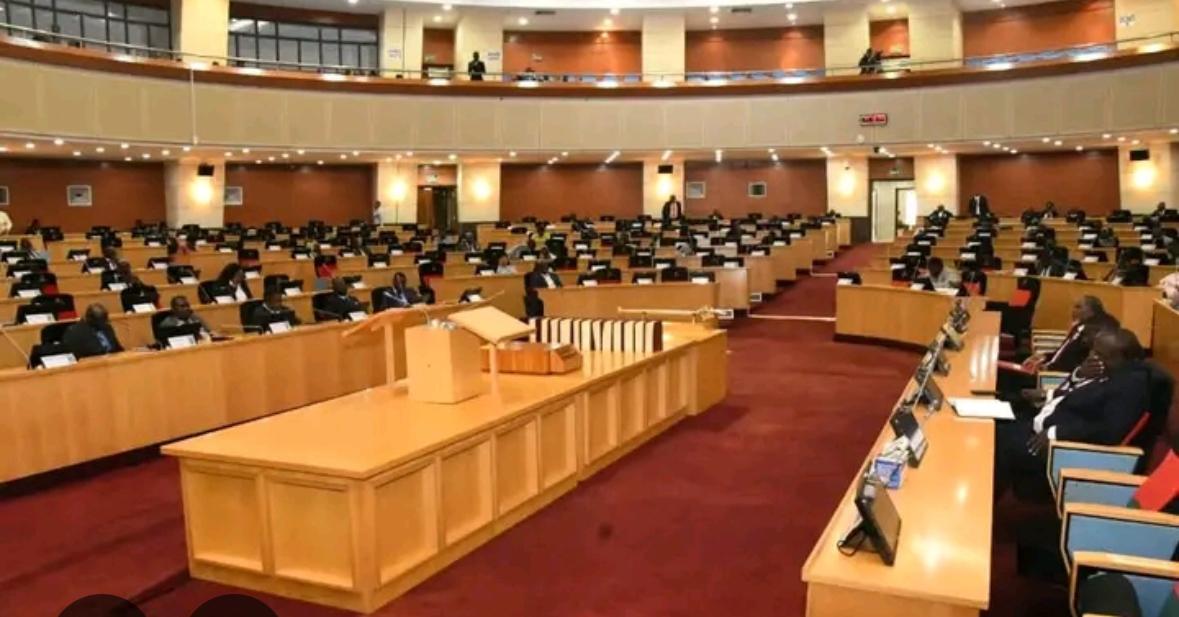
The parliamentary Cluster Committee on Commissions, Statutory Corporations and Public Appointments has warned that the offices of the First and Second Vice Presidents risk failing to effectively carry out their duties due to insufficient funding in the new budget.
Presenting the committee’s report in Parliament, chairperson Felix Njawala, Member of Parliament for Mwanza Central, said the Office of the Vice President requires an additional MWK2.4 billion for rehabilitation of the Area 12 residences and procurement of three convoy vehicles, including VVIP ambulances. He noted that the office is currently using a Land Cruiser ambulance.
Njawala added that while the newly established Office of the Second Vice President has been allocated MWK4.15 billion — up from MWK1.499 billion at the 2025/26 mid-year review — it still requires significant capital investment to function effectively.
“The committee recommends that the Minister of Finance provide additional resources to enable full operationalisation of the Office of the Second Vice President. This should include funding for convoy vehicles, VVIP ambulances, office furniture, equipment and enhanced security befitting the office’s status,” he said.
The committee also urged the Treasury to take into account delegated functions from the Office of the President when allocating resources and to ensure adequate funding for personal emoluments to support staffing levels.
Njawala further indicated that the Office of the President and Cabinet (OPC) requires additional funding to execute key functions, including disaster response and public sector reforms. He said the OPC has been allocated MWK41.2 billion, representing a reduction of $24.25 million from the 2025/26 estimates.
On the Department of Human Resource Management and Development (DHRMD), the committee noted a 36.39 percent reduction in funding — from MWK1.3 billion to MWK845 million — which could undermine ongoing public service reforms.
The department requires additional resources to support the remuneration commission bill, upgrade the human resource management information system to a modern SAP human capital management platform, conduct a second phase of personnel audits, develop a competency framework and train HR officers for decentralised service delivery.
“The committee recommends that the Treasury prioritise these funding requirements to enhance public sector reform performance,” Njawala said.
The committee also raised concern over reduced funding to the Malawi Electoral Commission (MEC), which has been allocated MWK23 billion following the conclusion of general elections. Njawala said the Other Recurrent Transactions (ORT) allocation of MWK15.6 billion is insufficient to support critical activities such as by-elections and a post-election review.
Similarly, the Public-Private Partnership Commission has been allocated MWK1 billion against a requirement of MWK4.81 billion, a shortfall that could delay strategic projects, including the Shire Valley Transformation Programme and staff housing at the Malawi University of Science and Technology (MUST), as well as efforts to attract investors.
Other institutions flagged for underfunding include the National Statistical Office (NSO), Malawi Human Rights Commission (MHRC) and Civil Service Commission (CSC).
Njawala said the NSO requires an additional MWK9 billion to produce high-frequency data, prepare for census activities and replace its ageing vehicle fleet. The office has been allocated MWK33.76 billion, representing a 34.7 percent increase from revised estimates.
The MHRC has been allocated MWK2.8 billion, a 26.5 percent decrease from the previous year’s MWK3.81 billion. Meanwhile, the CSC, despite receiving MWK1.82 billion—up from MWK1.37 billion—still requires an additional MWK2.76 billion to effectively execute its mandate.
In a related development, the parliamentary Cluster Committee on Social and Community Affairs, Local Authorities and Rural Development expressed concern over reduced funding to key social ministries.
Chairperson Savel Kafwafwa, MP for Dedza Mayani, said funding cuts to the Ministry of Labour, Skills and Innovation are constraining programmes aimed at employment creation, skills development and labour protection.
“The ministry plays a critical role, yet it continues to face significant funding constraints that are affecting implementation of key programmes,” he said.
Kafwafwa also warned that declining funding for youth development programmes could reverse gains in youth empowerment by limiting policy dissemination, psychosocial support and participation in national development.
He further noted that funding to the Ministry of Gender, Children, Disability and Social Welfare has dropped from MWK69.6 billion in 2025/26 to MWK47 billion in 2026/27—a reduction of about 32 percent.
“This reduction is likely to adversely affect delivery of essential services to vulnerable populations,” he said, adding that the ministry’s ORT allocation has also fallen sharply, limiting its oversight capacity.
The committee also cited inadequate funding for councillor orientation, monitoring of the Constituency Development Fund and persistent transport challenges.
“As we speak, many councillors have not yet been oriented on their roles, which risks inefficiencies. These issues require urgent and deliberate attention if we are to achieve inclusive and equitable development,” Kafwafwa said.
However, Minister of Local Government and Rural Development Ben Phiri said the orientation programme for councillors has already commenced.
“The process delayed because it is extensive and must be conducted nationwide. But trainings have now started in Blantyre, covering Mangochi, Balaka and Blantyre districts in smaller groups,” he said.
—
Also Read: Chihana becomes Malawi’s Second VP, Mutharika talks regional balance
Related: Hunger top priority: Mutharika names Chihana VP, Jaffu army chief
Related: Malawi 2025: Outgoing VP Usi warns Mutharika of saboteurs within